


Why is my horse lame if there doesn’t seem to be an injury?
Lameness is one of the clearest signs that something is not working properly in a horse. However, it is not always accompanied by a visible wound or an obvious blow. In many cases, the source of the problem lies within the internal structures of the hoof, tendons, ligaments or joints, which can make identifying the cause more difficult.
Recognising the first signs and acting quickly is essential to prevent a minor injury from becoming a more serious problem.
When there is no visible injury
If a horse starts to go lame without showing any external injury, the source of the pain may be in the hoof or in another internal structure of the musculoskeletal system. In either case, the horse may show discomfort when walking even when everything appears normal.
There are several signs that should not be ignored: lameness that does not improve with rest, difficulty putting weight on a limb, heat in the hoof or a joint, swelling, sensitivity to touch, changes in posture or reluctance to move. When these symptoms appear, it is advisable to contact a veterinarian or farrier as soon as possible.
The most common causes
Hoof problems
Hoof problems are one of the most common causes of lameness without visible wounds. Because the hoof is a complex and highly sensitive structure, small internal injuries can cause significant pain.
One of the most common problems is an abscess, a pocket of pus that forms inside the hoof as a result of small cracks, infections or punctures. Abscesses often appear suddenly and cause marked lameness, accompanied by heat and sensitivity when pressure is applied to the hoof.
In these cases, it is important to keep the hoof clean and dry, restrict the horse’s movement and contact a farrier or veterinarian to locate and drain the abscess when necessary. In some cases, anti-inflammatory or antibiotic treatment may also be required.
Laminitis
Laminitis is one of the most serious conditions affecting the hoof. It involves inflammation of the laminae that connect the hoof to the internal bone and requires immediate veterinary attention.
It may be associated with a high-sugar diet, sudden dietary changes, obesity or certain metabolic disorders and systemic diseases.
Horses with laminitis often adopt a characteristic stance, shifting weight onto their hind limbs to relieve pain in the front feet. They may also take short, stiff steps and show clear reluctance to move, especially on hard surfaces.
If laminitis is suspected, the most important steps are to stop exercise, provide a comfortable surface and contact the veterinarian as soon as possible, as prompt action can prevent permanent damage.
Bruising
Not every impact leaves a visible mark. Walking on very hard ground, stones or uneven surfaces can cause bruising inside the hoof or limb, resulting in pain without any external wound.
In these cases, lameness may vary depending on the surface and can be accompanied by mild sensitivity or swelling. Rest, applying cold during the first few hours and checking the shoeing are often part of the initial management.
Tendon and ligament injuries
Tendons and ligaments can also be injured without any external wound. Although lameness may initially be mild, it usually becomes worse with work and is often accompanied by localised swelling or discomfort when the limb is flexed.
These injuries always require veterinary assessment, including ultrasound or other diagnostic tests, as well as a period of rest and an appropriate rehabilitation programme.
Joint problems
Joints and the spine can be another source of pain, particularly in older horses or those subjected to intense work. Stiffness, difficulty turning or changes in behaviour while being ridden are some of the most common symptoms.
Depending on the diagnosis, treatment may include rest, physiotherapy, anti-inflammatory medication, specific supplements and adjustments to the training programme.
How is the diagnosis made?
When the cause of lameness is not obvious, the veterinarian carries out a complete examination of the horse. In addition to observing the way it moves and palpating the hooves, tendons and joints, they may perform flexion tests and use diagnostic imaging such as X-rays or ultrasound to locate the source of the problem.
In some cases, the shoeing is also assessed, hoof sensitivity tests are performed or blood tests are carried out if an infectious or metabolic process is suspected.
What to do while waiting for the professional
When the cause of lameness is unknown, the safest approach is to immediately reduce the horse’s activity and prevent it from continuing to work.
It is also advisable to check the hooves carefully for stones, cracks, loose nails, areas of heat or any visible changes. Keeping the hooves clean and dry helps prevent complications, particularly when there is a risk of abscesses.
If the lameness appeared after a recent impact, applying cold may help control inflammation during the first few hours. Checking the condition of the ground and the shoeing can also provide useful information about the possible cause.
When should you call the veterinarian?
Although some mild discomfort may improve with rest, there are situations in which it is not advisable to wait. If the horse stops bearing weight on a limb, the lameness appears suddenly and is severe, there is heat or swelling, signs compatible with laminitis appear, or the problem does not improve within one or two days, a professional assessment is essential.
Acting early makes a difference
Lameness without a visible wound is relatively common and can have many different causes. In many cases, the problem lies within the hoof, although it can also be caused by injuries to tendons, ligaments or joints.
Carefully observing the first symptoms, limiting exercise and seeking professional help when necessary allows for an early diagnosis and the most appropriate treatment. In many cases, early intervention not only speeds up recovery but also reduces the risk of permanent injury and helps preserve the horse’s long-term health and wellbeing.
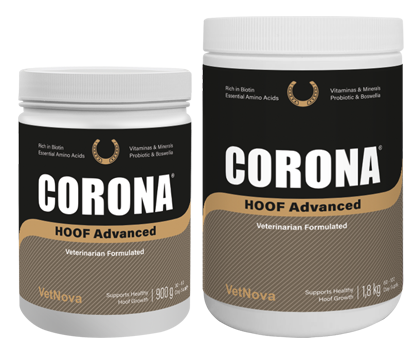
If you are interested in helping to strengthen your horse’s hooves through nutrition, discover CORONA® HOOF Advanced. Click here for more information.
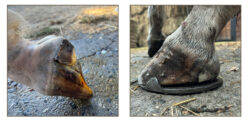
Real-life case: recovery in just 2 months
CDE 4 year old colt with a crack in the hoof after a free gallop in the field. Initially, the farrier, together with the vet, lowered the pad in the area of the crack and gave him 2 casts for 10 days each.
To find out how to help strengthen your horse’s hooves, discover our supplement CORONA® HOOF Advanced.
If you’re interested in strengthening your horse’s hooves through nutrition, discover CORONA® HOOF Advanced. Click here for more information
1. The influence of weather conditions on horse hoof health
2. Hoof care in older horses: how to keep hooves strong with age
3. Why is my horse lame if there doesn’t seem to be an injury?
4. Shood or barefoot: what is best for your horse?
5. Hoof care in older horses: how to keep hooves strong with age
6. How to prevent and treat thrush in horses
If you are interested in helping to strengthen your horse’s hooves through nutrition, discover CORONA® HOOF Advanced.
Why is my horse lame if there doesn’t seem to be an injury?
Lameness is one of the clearest signs that something is not working properly in a horse. However, it is not always accompanied by a visible wound or an obvious blow. In many cases, the source of the problem lies within the internal structures of the hoof, tendons, ligaments or joints, which can make identifying the cause more difficult.
Recognising the first signs and acting quickly is essential to prevent a minor injury from becoming a more serious problem.
When there is no visible injury
If a horse starts to go lame without showing any external injury, the source of the pain may be in the hoof or in another internal structure of the musculoskeletal system. In either case, the horse may show discomfort when walking even when everything appears normal.
There are several signs that should not be ignored: lameness that does not improve with rest, difficulty putting weight on a limb, heat in the hoof or a joint, swelling, sensitivity to touch, changes in posture or reluctance to move. When these symptoms appear, it is advisable to contact a veterinarian or farrier as soon as possible.
The most common causes
Hoof problems
Hoof problems are one of the most common causes of lameness without visible wounds. Because the hoof is a complex and highly sensitive structure, small internal injuries can cause significant pain.
One of the most common problems is an abscess, a pocket of pus that forms inside the hoof as a result of small cracks, infections or punctures. Abscesses often appear suddenly and cause marked lameness, accompanied by heat and sensitivity when pressure is applied to the hoof.
In these cases, it is important to keep the hoof clean and dry, restrict the horse’s movement and contact a farrier or veterinarian to locate and drain the abscess when necessary. In some cases, anti-inflammatory or antibiotic treatment may also be required.
Laminitis
Laminitis is one of the most serious conditions affecting the hoof. It involves inflammation of the laminae that connect the hoof to the internal bone and requires immediate veterinary attention.
It may be associated with a high-sugar diet, sudden dietary changes, obesity or certain metabolic disorders and systemic diseases.
Horses with laminitis often adopt a characteristic stance, shifting weight onto their hind limbs to relieve pain in the front feet. They may also take short, stiff steps and show clear reluctance to move, especially on hard surfaces.
If laminitis is suspected, the most important steps are to stop exercise, provide a comfortable surface and contact the veterinarian as soon as possible, as prompt action can prevent permanent damage.
Bruising
Not every impact leaves a visible mark. Walking on very hard ground, stones or uneven surfaces can cause bruising inside the hoof or limb, resulting in pain without any external wound.
In these cases, lameness may vary depending on the surface and can be accompanied by mild sensitivity or swelling. Rest, applying cold during the first few hours and checking the shoeing are often part of the initial management.
Tendon and ligament injuries
Tendons and ligaments can also be injured without any external wound. Although lameness may initially be mild, it usually becomes worse with work and is often accompanied by localised swelling or discomfort when the limb is flexed.
These injuries always require veterinary assessment, including ultrasound or other diagnostic tests, as well as a period of rest and an appropriate rehabilitation programme.
Joint problems
Joints and the spine can be another source of pain, particularly in older horses or those subjected to intense work. Stiffness, difficulty turning or changes in behaviour while being ridden are some of the most common symptoms.
Depending on the diagnosis, treatment may include rest, physiotherapy, anti-inflammatory medication, specific supplements and adjustments to the training programme.
How is the diagnosis made?
When the cause of lameness is not obvious, the veterinarian carries out a complete examination of the horse. In addition to observing the way it moves and palpating the hooves, tendons and joints, they may perform flexion tests and use diagnostic imaging such as X-rays or ultrasound to locate the source of the problem.
In some cases, the shoeing is also assessed, hoof sensitivity tests are performed or blood tests are carried out if an infectious or metabolic process is suspected.
What to do while waiting for the professional
When the cause of lameness is unknown, the safest approach is to immediately reduce the horse’s activity and prevent it from continuing to work.
It is also advisable to check the hooves carefully for stones, cracks, loose nails, areas of heat or any visible changes. Keeping the hooves clean and dry helps prevent complications, particularly when there is a risk of abscesses.
If the lameness appeared after a recent impact, applying cold may help control inflammation during the first few hours. Checking the condition of the ground and the shoeing can also provide useful information about the possible cause.
When should you call the veterinarian?
Although some mild discomfort may improve with rest, there are situations in which it is not advisable to wait. If the horse stops bearing weight on a limb, the lameness appears suddenly and is severe, there is heat or swelling, signs compatible with laminitis appear, or the problem does not improve within one or two days, a professional assessment is essential.
Acting early makes a difference
Lameness without a visible wound is relatively common and can have many different causes. In many cases, the problem lies within the hoof, although it can also be caused by injuries to tendons, ligaments or joints.
Carefully observing the first symptoms, limiting exercise and seeking professional help when necessary allows for an early diagnosis and the most appropriate treatment. In many cases, early intervention not only speeds up recovery but also reduces the risk of permanent injury and helps preserve the horse’s long-term health and wellbeing.
If you are interested in helping to strengthen your horse’s hooves through nutrition, discover CORONA® HOOF Advanced. Click here for more information.
Real-life case: recovery in just 2 months
CDE 4 year old colt with a crack in the hoof after a free gallop in the field. Initially, the farrier, together with the vet, lowered the pad in the area of the crack and gave him 2 casts for 10 days each.
To find out how to help strengthen your horse’s hooves, discover our supplement CORONA® HOOF Advanced.
If you’re interested in strengthening your horse’s hooves through nutrition, discover CORONA® HOOF Advanced. Click here for more information
1. The influence of weather conditions on horse hoof health
2. Hoof care in older horses: how to keep hooves strong with age
3. Why is my horse lame if there doesn’t seem to be an injury?
4. Shood or barefoot: what is best for your horse?
5. Hoof care in older horses: how to keep hooves strong with age
6. How to prevent and treat thrush in horses
If you are interested in helping to strengthen your horse’s hooves through nutrition, discover CORONA® HOOF Advanced.