


How to prevent and treat thrush in horses
Thrush is one of the most common conditions affecting the horse’s hoof. Although it may initially seem like a minor problem, if it is not detected and treated in time it can cause pain, lameness and even affect deeper structures within the hoof.
The good news is that, in most cases, it is easy to prevent. Good hygiene, regular hoof checks and a suitable environment are simple measures that greatly reduce the risk of developing thrush.
What is thrush?
The frog is the V-shaped structure located on the underside of the hoof. As well as absorbing impact during movement, it plays an important role in circulation within the foot.
Thrush is an infection caused mainly by bacteria, although fungi may also be involved in some cases. It usually develops in the grooves of the frog when there is constant moisture and a build-up of dirt, creating the perfect environment for microorganisms to multiply.
As the infection progresses, the tissue begins to deteriorate and the horse may experience discomfort when walking or even become lame.
Why does it occur?
There is no single cause. The condition is usually the result of several factors related to horse management.
Moisture is the main trigger. Spending many hours in mud, wet bedding or poorly ventilated stables softens the frog and makes it easier for bacteria to develop.
Poor hygiene also contributes. When hooves are not cleaned daily, mud, manure and other organic material accumulate in the grooves, making natural cleaning of the foot more difficult.
Another important factor is hoof balance. Incorrect trimming or shoeing can prevent the frog from making proper contact with the ground, encouraging the accumulation of dirt and moisture.
Exercise also plays a role. Horses that spend many hours stabled move less, so the hoof loses part of its natural ability to clean and ventilate itself.
How to recognise the first signs
Detecting the problem in its early stages allows it to be resolved quickly and prevents complications.
The most common signs are:
- A strong, unpleasant odour, similar to that of decomposing material.
- Black or dark grey discolouration of the frog.
- Moist, soft tissue that comes away when the hoof is cleaned.
- Deep grooves around the frog.
- Sensitivity during cleaning.
- Lameness in more advanced cases.
It is important to remember that many horses do not show pain at first. That is why hooves should be checked every day, even when the horse appears completely healthy.
It is also important to distinguish thrush from other problems such as abscesses, trauma or white line disease, which have different symptoms and require different treatments.
Prevention: the best treatment
The best way to manage thrush is to prevent it from developing in the first place.
Daily hoof cleaning is the most important habit. Removing mud, manure and stones helps keep the frog dry and allows any changes to be detected before the infection progresses.
It is equally important to maintain a clean and dry environment. Replacing bedding regularly, improving stable drainage and avoiding long periods in muddy areas considerably reduces the risk.
Regular farrier checks also play a fundamental role. A correctly balanced hoof prevents cavities from forming where moisture and dirt can accumulate.
In horses prone to thrush, the veterinarian or farrier may recommend specific preventive products to protect the frog.
Finally, exercise should not be overlooked. Movement supports circulation, strengthens the hoof and contributes to its natural cleaning process.
How is it treated?
When an infection is already present, it is important to act as soon as possible.
The first step is to carefully clean the frog and remove any deteriorated tissue or accumulated black material, while avoiding injury. In severe cases, this cleaning may need to be carried out by a professional.
The area should then be disinfected with specific products recommended by the veterinarian or farrier. Once treatment has been applied, it is essential to keep the hoof as dry as possible to prevent bacteria from multiplying again.
If the underlying problem is related to hoof imbalance, it will need to be corrected through appropriate trimming or shoeing. Otherwise, the infection is likely to return.
In deep infections or when the horse shows obvious pain, inflammation or lameness, veterinary examination is essential. In these situations, more specific treatment and even antibiotics may be required.
Preventing recurrence
Once the infection has cleared, the goal is to prevent it from coming back.
To achieve this, maintain a consistent hygiene routine, clean the hooves daily and regularly check the condition of the frog.
It is also advisable to monitor stable conditions, replace bedding when necessary, improve ventilation and prevent moisture from accumulating.
In paddocks and work areas, reducing mud and improving drainage helps keep the hooves in better condition throughout the year.
Horses at greater risk
Although any horse can develop thrush, some animals require closer monitoring.
Older horses often have slower hoof growth and lower levels of physical activity, conditions that encourage moisture to accumulate.
Ponies and horses with weak hooves may also be more prone to the problem due to certain anatomical characteristics.
Similarly, animals with joint problems or limited mobility may place their feet differently, which can alter normal frog function and increase the risk of infection.
Conclusion
Thrush is a common condition, but it is also one of the easiest to prevent when basic management practices are followed.
Daily hoof cleaning, a dry environment, regular farrier checks and early detection of the first signs are the best tools for keeping hooves healthy.
If you notice a bad smell, changes in frog colour, soft tissue or sensitivity during cleaning, do not wait for the problem to get worse. Prompt intervention usually allows for a straightforward recovery and prevents complications that could affect the horse’s wellbeing and performance.
If you are interested in helping to strengthen your horse’s hooves through nutrition, discover CORONA® HOOF Advanced. Click here for more information.
Real-life case: recovery in just 2 months
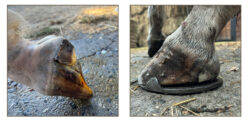
CDE 4 year old colt with a crack in the hoof after a free gallop in the field. Initially, the farrier, together with the vet, lowered the pad in the area of the crack and gave him 2 casts for 10 days each.
To find out how to help strengthen your horse’s hooves, discover our supplement CORONA® HOOF Advanced.
If you’re interested in strengthening your horse’s hooves through nutrition, discover CORONA® HOOF Advanced. Click here for more information
1. The influence of weather conditions on horse hoof health
2. Hoof care in older horses: how to keep hooves strong with age
3. Why is my horse lame if there doesn’t seem to be an injury?
4. Shood or barefoot: what is best for your horse?
5. Hoof care in older horses: how to keep hooves strong with age
6. How to prevent and treat thrush in horses
If you are interested in helping to strengthen your horse’s hooves through nutrition, discover CORONA® HOOF Advanced.

How to prevent and treat thrush in horses
Thrush is one of the most common conditions affecting the horse’s hoof. Although it may initially seem like a minor problem, if it is not detected and treated in time it can cause pain, lameness and even affect deeper structures within the hoof.
The good news is that, in most cases, it is easy to prevent. Good hygiene, regular hoof checks and a suitable environment are simple measures that greatly reduce the risk of developing thrush.
What is thrush?
The frog is the V-shaped structure located on the underside of the hoof. As well as absorbing impact during movement, it plays an important role in circulation within the foot.
Thrush is an infection caused mainly by bacteria, although fungi may also be involved in some cases. It usually develops in the grooves of the frog when there is constant moisture and a build-up of dirt, creating the perfect environment for microorganisms to multiply.
As the infection progresses, the tissue begins to deteriorate and the horse may experience discomfort when walking or even become lame.
Why does it occur?
There is no single cause. The condition is usually the result of several factors related to horse management.
Moisture is the main trigger. Spending many hours in mud, wet bedding or poorly ventilated stables softens the frog and makes it easier for bacteria to develop.
Poor hygiene also contributes. When hooves are not cleaned daily, mud, manure and other organic material accumulate in the grooves, making natural cleaning of the foot more difficult.
Another important factor is hoof balance. Incorrect trimming or shoeing can prevent the frog from making proper contact with the ground, encouraging the accumulation of dirt and moisture.
Exercise also plays a role. Horses that spend many hours stabled move less, so the hoof loses part of its natural ability to clean and ventilate itself.
How to recognise the first signs
Detecting the problem in its early stages allows it to be resolved quickly and prevents complications.
The most common signs are:
- A strong, unpleasant odour, similar to that of decomposing material.
- Black or dark grey discolouration of the frog.
- Moist, soft tissue that comes away when the hoof is cleaned.
- Deep grooves around the frog.
- Sensitivity during cleaning.
- Lameness in more advanced cases.
It is important to remember that many horses do not show pain at first. That is why hooves should be checked every day, even when the horse appears completely healthy.
It is also important to distinguish thrush from other problems such as abscesses, trauma or white line disease, which have different symptoms and require different treatments.
Prevention: the best treatment
The best way to manage thrush is to prevent it from developing in the first place.
Daily hoof cleaning is the most important habit. Removing mud, manure and stones helps keep the frog dry and allows any changes to be detected before the infection progresses.
It is equally important to maintain a clean and dry environment. Replacing bedding regularly, improving stable drainage and avoiding long periods in muddy areas considerably reduces the risk.
Regular farrier checks also play a fundamental role. A correctly balanced hoof prevents cavities from forming where moisture and dirt can accumulate.
In horses prone to thrush, the veterinarian or farrier may recommend specific preventive products to protect the frog.
Finally, exercise should not be overlooked. Movement supports circulation, strengthens the hoof and contributes to its natural cleaning process.
How is it treated?
When an infection is already present, it is important to act as soon as possible.
The first step is to carefully clean the frog and remove any deteriorated tissue or accumulated black material, while avoiding injury. In severe cases, this cleaning may need to be carried out by a professional.
The area should then be disinfected with specific products recommended by the veterinarian or farrier. Once treatment has been applied, it is essential to keep the hoof as dry as possible to prevent bacteria from multiplying again.
If the underlying problem is related to hoof imbalance, it will need to be corrected through appropriate trimming or shoeing. Otherwise, the infection is likely to return.
In deep infections or when the horse shows obvious pain, inflammation or lameness, veterinary examination is essential. In these situations, more specific treatment and even antibiotics may be required.
Preventing recurrence
Once the infection has cleared, the goal is to prevent it from coming back.
To achieve this, maintain a consistent hygiene routine, clean the hooves daily and regularly check the condition of the frog.
It is also advisable to monitor stable conditions, replace bedding when necessary, improve ventilation and prevent moisture from accumulating.
In paddocks and work areas, reducing mud and improving drainage helps keep the hooves in better condition throughout the year.
Horses at greater risk
Although any horse can develop thrush, some animals require closer monitoring.
Older horses often have slower hoof growth and lower levels of physical activity, conditions that encourage moisture to accumulate.
Ponies and horses with weak hooves may also be more prone to the problem due to certain anatomical characteristics.
Similarly, animals with joint problems or limited mobility may place their feet differently, which can alter normal frog function and increase the risk of infection.
Conclusion
Thrush is a common condition, but it is also one of the easiest to prevent when basic management practices are followed.
Daily hoof cleaning, a dry environment, regular farrier checks and early detection of the first signs are the best tools for keeping hooves healthy.
If you notice a bad smell, changes in frog colour, soft tissue or sensitivity during cleaning, do not wait for the problem to get worse. Prompt intervention usually allows for a straightforward recovery and prevents complications that could affect the horse’s wellbeing and performance.
If you are interested in helping to strengthen your horse’s hooves through nutrition, discover CORONA® HOOF Advanced. Click here for more information.
Real-life case: recovery in just 2 months
CDE 4 year old colt with a crack in the hoof after a free gallop in the field. Initially, the farrier, together with the vet, lowered the pad in the area of the crack and gave him 2 casts for 10 days each.
To find out how to help strengthen your horse’s hooves, discover our supplement CORONA® HOOF Advanced.
If you’re interested in strengthening your horse’s hooves through nutrition, discover CORONA® HOOF Advanced. Click here for more information
1. The influence of weather conditions on horse hoof health
2. Hoof care in older horses: how to keep hooves strong with age
3. Why is my horse lame if there doesn’t seem to be an injury?
4. Shood or barefoot: what is best for your horse?
5. Hoof care in older horses: how to keep hooves strong with age
6. How to prevent and treat thrush in horses
If you are interested in helping to strengthen your horse’s hooves through nutrition, discover CORONA® HOOF Advanced.