

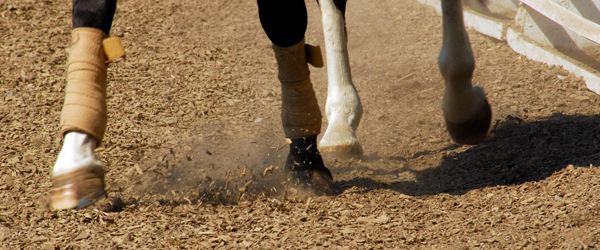
The importance of movement for hoof health
Movement is a natural need for horses and one of the factors that has the greatest influence on hoof health. Neither a sedentary lifestyle nor excessive exercise is beneficial: the key is finding a balance that allows the hoof to develop, adapt and remain strong over time.
It is often thought that good nutrition or appropriate shoeing is enough to maintain healthy hooves. However, exercise plays an equally important role, as it stimulates circulation, supports hoof growth and helps all the structures of the foot function properly.
A strong hoof needs movement
The hoof is not simply a hard covering that protects the horse’s foot. It is living tissue that constantly responds to the stimuli it receives. Every step activates a natural mechanism that improves blood circulation within the hoof, allowing the nutrients needed to build strong, resilient tissue to reach it.
When a horse remains still for long periods, this process slows down. Hoof growth may become poorer in quality, the wall can become more fragile and the risk of cracks, deformities or joint problems increases. Lack of activity also affects the horse’s biomechanics, changing its posture and the way it distributes weight across the hooves.
By contrast, a horse that moves regularly develops more balanced and resilient hooves, better able to cope with the demands of everyday work.
The benefits of exercise
Movement offers benefits that go far beyond strengthening the muscles. Every walk stimulates circulation, supports the removal of waste products and promotes tissue regeneration.
At the same time, mechanical stimulation strengthens keratin, the protein that forms the hoof wall, helping to reduce cracks and improve resistance to impact.
Exercise also encourages more even growth. The natural wear produced by walking helps the hoof maintain better balance and reduces the risk of deformities. In addition, internal structures such as the sole and laminae retain a greater ability to absorb impact and provide stability to the foot.
Walking: the most important exercise
Although many people associate training with intense exercise, walking remains the most beneficial activity for hoof health. It is a natural movement that stimulates circulation, strengthens tendons and ligaments and allows the hoof to wear down gradually and evenly.
The amount of exercise will depend on the horse’s age, fitness and discipline, but even horses that do little work benefit from daily walking. In horses in training, a good warm-up and cool-down at walk help prepare the structures of the foot and reduce the risk of injury.
It is not about walking faster; what matters is walking regularly and on suitable surfaces.
The importance of the ground
Not all surfaces have the same effect on the hoof. Firm ground with a slight degree of cushioning is generally recommended, as it provides good stimulation without excessive impact. Well-maintained sand arenas, compacted earth or firm pasture allow natural wear and encourage good hoof flexion.
By contrast, very hard surfaces such as asphalt or extremely dry ground increase the risk of microtrauma, pain and lameness. Paths with large stones can cause bruising, cracks or abscesses, while very soft or muddy ground reduces stability and encourages uneven wear.
Whenever possible, it is advisable to alternate between different types of surface to stimulate the hoof without overloading it.
Avoiding excess is also part of hoof care
Just as harmful as too little movement can be excessive or poorly planned training. When the workload exceeds the hoof’s ability to adapt, problems such as excessive wall wear, tendon inflammation, sensitivity or small cracks can appear and, if not detected in time, develop into more serious injuries.
Warning signs include heat in the hooves after exercise, changes in the way the horse moves, discomfort when walking or unusually rapid wear.
The best way to prevent these situations is to increase workload gradually, always allow time for warming up and recovery, vary the surfaces and regularly monitor hoof condition.
Adapting exercise to each discipline
Each equestrian discipline places different demands on the hooves. Show jumpers need to cope with repeated impact; dressage horses perform technical movements that concentrate effort on certain areas of the hoof; endurance horses work over long distances; and working horses continually face uneven surfaces.
In every case, training plans should be adapted to these needs. Alternating higher-intensity days with recovery days, incorporating work at walk and checking the hooves regularly helps reduce the risk of injury and extend the horse’s sporting life.
Consistent work delivers better results
Hoof health does not depend on a single measure, but on a combination of factors. Balanced exercise, appropriate nutrition, regular farrier checks and suitable surfaces form the basis for maintaining strong, functional hooves.
Daily movement remains one of the simplest and most effective tools for supporting hoof growth, improving strength and preventing many common problems. As with every aspect of horse care, consistency always delivers better results than quick fixes.
A horse that moves regularly and in a way suited to its needs is more likely to develop healthy, resilient hooves ready to cope with everyday work.
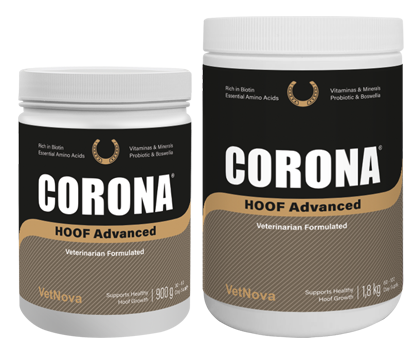
To discover how to help strengthen your horse’s hooves, take a look at our CORONA® HOOF Advanced. supplement. Click here for more information.
Real-life case: recovery in just 2 months
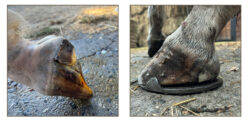
CDE 4 year old colt with a crack in the hoof after a free gallop in the field. Initially, the farrier, together with the vet, lowered the pad in the area of the crack and gave him 2 casts for 10 days each.
To find out how to help strengthen your horse’s hooves, discover our supplement CORONA® HOOF Advanced.
If you’re interested in strengthening your horse’s hooves through nutrition, discover CORONA® HOOF Advanced. Click here for more information CORONA® HOOF Advanced. Click here for more information.
1. The influence of weather conditions on horse hoof health
2. Hoof care in older horses: how to keep hooves strong with age
3. Why is my horse lame if there doesn’t seem to be an injury?
4. Shood or barefoot: what is best for your horse?
5. Hoof care in older horses: how to keep hooves strong with age
6. How to prevent and treat thrush in horses
If you are interested in helping to strengthen your horse’s hooves through nutrition, discover CORONA® HOOF Advanced.
The importance of movement for hoof health
Movement is a natural need for horses and one of the factors that has the greatest influence on hoof health. Neither a sedentary lifestyle nor excessive exercise is beneficial: the key is finding a balance that allows the hoof to develop, adapt and remain strong over time.
It is often thought that good nutrition or appropriate shoeing is enough to maintain healthy hooves. However, exercise plays an equally important role, as it stimulates circulation, supports hoof growth and helps all the structures of the foot function properly.
A strong hoof needs movement
The hoof is not simply a hard covering that protects the horse’s foot. It is living tissue that constantly responds to the stimuli it receives. Every step activates a natural mechanism that improves blood circulation within the hoof, allowing the nutrients needed to build strong, resilient tissue to reach it.
When a horse remains still for long periods, this process slows down. Hoof growth may become poorer in quality, the wall can become more fragile and the risk of cracks, deformities or joint problems increases. Lack of activity also affects the horse’s biomechanics, changing its posture and the way it distributes weight across the hooves.
By contrast, a horse that moves regularly develops more balanced and resilient hooves, better able to cope with the demands of everyday work.
The benefits of exercise
Movement offers benefits that go far beyond strengthening the muscles. Every walk stimulates circulation, supports the removal of waste products and promotes tissue regeneration.
At the same time, mechanical stimulation strengthens keratin, the protein that forms the hoof wall, helping to reduce cracks and improve resistance to impact.
Exercise also encourages more even growth. The natural wear produced by walking helps the hoof maintain better balance and reduces the risk of deformities. In addition, internal structures such as the sole and laminae retain a greater ability to absorb impact and provide stability to the foot.
Walking: the most important exercise
Although many people associate training with intense exercise, walking remains the most beneficial activity for hoof health. It is a natural movement that stimulates circulation, strengthens tendons and ligaments and allows the hoof to wear down gradually and evenly.
The amount of exercise will depend on the horse’s age, fitness and discipline, but even horses that do little work benefit from daily walking. In horses in training, a good warm-up and cool-down at walk help prepare the structures of the foot and reduce the risk of injury.
It is not about walking faster; what matters is walking regularly and on suitable surfaces.
The importance of the ground
Not all surfaces have the same effect on the hoof. Firm ground with a slight degree of cushioning is generally recommended, as it provides good stimulation without excessive impact. Well-maintained sand arenas, compacted earth or firm pasture allow natural wear and encourage good hoof flexion.
By contrast, very hard surfaces such as asphalt or extremely dry ground increase the risk of microtrauma, pain and lameness. Paths with large stones can cause bruising, cracks or abscesses, while very soft or muddy ground reduces stability and encourages uneven wear.
Whenever possible, it is advisable to alternate between different types of surface to stimulate the hoof without overloading it.
Avoiding excess is also part of hoof care
Just as harmful as too little movement can be excessive or poorly planned training. When the workload exceeds the hoof’s ability to adapt, problems such as excessive wall wear, tendon inflammation, sensitivity or small cracks can appear and, if not detected in time, develop into more serious injuries.
Warning signs include heat in the hooves after exercise, changes in the way the horse moves, discomfort when walking or unusually rapid wear.
The best way to prevent these situations is to increase workload gradually, always allow time for warming up and recovery, vary the surfaces and regularly monitor hoof condition.
Adapting exercise to each discipline
Each equestrian discipline places different demands on the hooves. Show jumpers need to cope with repeated impact; dressage horses perform technical movements that concentrate effort on certain areas of the hoof; endurance horses work over long distances; and working horses continually face uneven surfaces.
In every case, training plans should be adapted to these needs. Alternating higher-intensity days with recovery days, incorporating work at walk and checking the hooves regularly helps reduce the risk of injury and extend the horse’s sporting life.
Consistent work delivers better results
Hoof health does not depend on a single measure, but on a combination of factors. Balanced exercise, appropriate nutrition, regular farrier checks and suitable surfaces form the basis for maintaining strong, functional hooves.
Daily movement remains one of the simplest and most effective tools for supporting hoof growth, improving strength and preventing many common problems. As with every aspect of horse care, consistency always delivers better results than quick fixes.
A horse that moves regularly and in a way suited to its needs is more likely to develop healthy, resilient hooves ready to cope with everyday work.
To discover how to help strengthen your horse’s hooves, take a look at our CORONA® HOOF Advanced. supplement. Click here for more information.
Real-life case: recovery in just 2 months
CDE 4 year old colt with a crack in the hoof after a free gallop in the field. Initially, the farrier, together with the vet, lowered the pad in the area of the crack and gave him 2 casts for 10 days each.
To find out how to help strengthen your horse’s hooves, discover our supplement CORONA® HOOF Advanced.
If you’re interested in strengthening your horse’s hooves through nutrition, discover CORONA® HOOF Advanced. Click here for more information CORONA® HOOF Advanced. Click here for more information.
1. The influence of weather conditions on horse hoof health
2. Hoof care in older horses: how to keep hooves strong with age
3. Why is my horse lame if there doesn’t seem to be an injury?
4. Shood or barefoot: what is best for your horse?
5. Hoof care in older horses: how to keep hooves strong with age
6. How to prevent and treat thrush in horses
If you are interested in helping to strengthen your horse’s hooves through nutrition, discover CORONA® HOOF Advanced.