


The influence of weather conditions on horse hoof health
There is a well-known saying in the equestrian world: “No hoof, no horse.” And it is no exaggeration. Hoof health has a direct impact on a horse’s wellbeing, performance and longevity. Although factors such as genetics, nutrition, workload and shoeing are essential, the weather also plays a decisive role and is often overlooked.
Rain, heat, cold and sudden seasonal changes can affect the hoof’s natural balance and encourage cracks, infections or growth problems. Understanding how the hoof responds to different weather conditions makes it possible to prevent many of these complications and keep it strong throughout the year.
A living tissue that needs balance
The hoof is not a rigid, inert structure. It is living tissue made mainly of keratin, a protein whose quality depends on both nutrition and hydration.
Its structure consists of the hoof wall, sole, frog, white line and coronary band, where the hoof grows. All these parts work together to support the horse’s weight, absorb impact and protect the internal structures of the foot.
To function properly, the hoof needs to maintain a balanced level of moisture. When it is too wet, it loses strength and becomes more vulnerable to infection. On the other hand, if it becomes excessively dry, it loses elasticity and cracks or breakages may appear. Continuous changes between periods of rain and dry weather are particularly harmful because the hoof does not have enough time to adapt.
How does the weather affect the hooves?
Moisture and mud:
Prolonged rain and muddy ground soften the hoof wall, sole and frog. As a result, the hoof’s natural ability to protect itself against bacteria and fungi is reduced.
Common problems in wet environments include thrush, white line disease and sole bruising. In addition, when a horse spends long periods standing on wet bedding or in poor hygienic conditions, the risk of infection increases considerably.
Keeping stables clean and dry, as well as checking the hooves after every outing in muddy conditions, are simple measures that help prevent these problems.
Heat and dryness:
High temperatures and a lack of moisture have the opposite effect. The hoof loses water quickly, becomes more rigid and may develop cracks, chips or breaks between farrier visits.
During periods of drought, the ground also tends to become harder. This increases impact on the limbs and can contribute to bruising, abscesses and joint discomfort.
Cold weather and seasonal changes:
In winter, hoof growth usually slows down due to reduced blood circulation. Cold air and heated indoor environments can also contribute to hoof dehydration. In areas with snow, ice accumulating under the hooves can alter the horse’s footing and increase the risk of injury.
Spring and autumn present another important challenge. The alternation between dry and rainy days causes repeated cycles of hoof expansion and contraction which, over time, can weaken its structure and encourage cracks or separations in the white line.
Nutrition also makes a difference:
Although the weather cannot be controlled, it is possible to help a horse develop stronger hooves through appropriate nutrition.
The hoof grows from the coronary band, so the quality of the tissue we will see in a few months depends on the nutrients the horse receives today. For this reason, improvement is never immediate but gradual.
Among the most important nutrients are:
- Biotin, which helps improve hoof wall strength.
- Zinc and copper, which are essential for proper keratin formation and for maintaining tissue elasticity.
- Sulphur-containing amino acids, particularly methionine, which are essential for producing the protein that forms the hoof.
- Omega-3 fatty acids, which help maintain hoof flexibility and support the horse’s comfort.
Some supplements also contain plant extracts such as Boswellia serrata, known for its anti-inflammatory properties. Although it does not act directly on the hoof, it may help improve comfort and mobility, supporting better circulation in the limbs.
A balanced diet throughout the year helps the hoof cope better with the stress caused by environmental conditions.
The role of the farrier and daily care
However, daily maintenance is equally important. Checking the hooves regularly, cleaning them properly and observing any changes in their appearance makes it possible to act before significant injuries develop.
It is also worth adapting exercise to ground conditions. Alternating between different surfaces and avoiding intense work on extremely hard or very muddy ground helps reduce the stress placed on the hooves.
Prevention is the best strategy
There is no single solution for protecting hooves from the weather. The key is to combine several factors: a balanced diet, regular check-ups, good stable management, appropriate exercise and constant monitoring of hoof condition.
Weather conditions will continue to change throughout the year, but with proper management it is possible to minimise their impact and maintain healthy, strong and functional hooves.
After all, caring for the hooves means caring for the foundation that supports the entire horse. Investing in prevention will always be the best decision to protect its wellbeing, performance and quality of life.
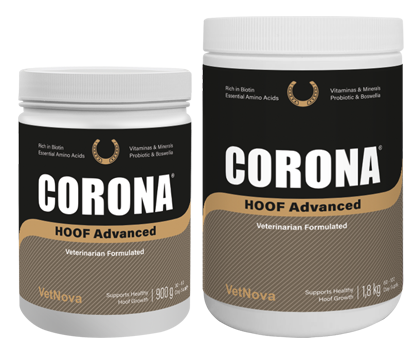
If you are interested in helping to strengthen your horse’s hooves through nutrition, discover CORONA® HOOF Advanced. Click here for more information.
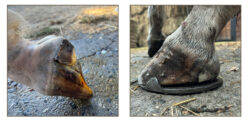
Real-life case: recovery in just 2 months
CDE 4 year old colt with a crack in the hoof after a free gallop in the field. Initially, the farrier, together with the vet, lowered the pad in the area of the crack and gave him 2 casts for 10 days each.
To find out how to help strengthen your horse’s hooves, discover our supplement CORONA® HOOF Advanced.
If you’re interested in strengthening your horse’s hooves through nutrition, discover CORONA® HOOF Advanced. Click here for more information
1. The influence of weather conditions on horse hoof health
2. Hoof care in older horses: how to keep hooves strong with age
3. Why is my horse lame if there doesn’t seem to be an injury?
4. Shood or barefoot: what is best for your horse?
5. Hoof care in older horses: how to keep hooves strong with age
6. How to prevent and treat thrush in horses
If you are interested in helping to strengthen your horse’s hooves through nutrition, discover CORONA® HOOF Advanced.
The influence of weather conditions on horse hoof health
There is a well-known saying in the equestrian world: “No hoof, no horse.” And it is no exaggeration. Hoof health has a direct impact on a horse’s wellbeing, performance and longevity. Although factors such as genetics, nutrition, workload and shoeing are essential, the weather also plays a decisive role and is often overlooked.
Rain, heat, cold and sudden seasonal changes can affect the hoof’s natural balance and encourage cracks, infections or growth problems. Understanding how the hoof responds to different weather conditions makes it possible to prevent many of these complications and keep it strong throughout the year.
A living tissue that needs balance
The hoof is not a rigid, inert structure. It is living tissue made mainly of keratin, a protein whose quality depends on both nutrition and hydration.
Its structure consists of the hoof wall, sole, frog, white line and coronary band, where the hoof grows. All these parts work together to support the horse’s weight, absorb impact and protect the internal structures of the foot.
To function properly, the hoof needs to maintain a balanced level of moisture. When it is too wet, it loses strength and becomes more vulnerable to infection. On the other hand, if it becomes excessively dry, it loses elasticity and cracks or breakages may appear. Continuous changes between periods of rain and dry weather are particularly harmful because the hoof does not have enough time to adapt.
How does the weather affect the hooves?
Moisture and mud:
Prolonged rain and muddy ground soften the hoof wall, sole and frog. As a result, the hoof’s natural ability to protect itself against bacteria and fungi is reduced.
Common problems in wet environments include thrush, white line disease and sole bruising. In addition, when a horse spends long periods standing on wet bedding or in poor hygienic conditions, the risk of infection increases considerably.
Keeping stables clean and dry, as well as checking the hooves after every outing in muddy conditions, are simple measures that help prevent these problems.
Heat and dryness:
High temperatures and a lack of moisture have the opposite effect. The hoof loses water quickly, becomes more rigid and may develop cracks, chips or breaks between farrier visits.
During periods of drought, the ground also tends to become harder. This increases impact on the limbs and can contribute to bruising, abscesses and joint discomfort.
Cold weather and seasonal changes:
In winter, hoof growth usually slows down due to reduced blood circulation. Cold air and heated indoor environments can also contribute to hoof dehydration. In areas with snow, ice accumulating under the hooves can alter the horse’s footing and increase the risk of injury.
Spring and autumn present another important challenge. The alternation between dry and rainy days causes repeated cycles of hoof expansion and contraction which, over time, can weaken its structure and encourage cracks or separations in the white line.
Nutrition also makes a difference:
Although the weather cannot be controlled, it is possible to help a horse develop stronger hooves through appropriate nutrition.
The hoof grows from the coronary band, so the quality of the tissue we will see in a few months depends on the nutrients the horse receives today. For this reason, improvement is never immediate but gradual.
Among the most important nutrients are:
- Biotin, which helps improve hoof wall strength.
- Zinc and copper, which are essential for proper keratin formation and for maintaining tissue elasticity.
- Sulphur-containing amino acids, particularly methionine, which are essential for producing the protein that forms the hoof.
- Omega-3 fatty acids, which help maintain hoof flexibility and support the horse’s comfort.
Some supplements also contain plant extracts such as Boswellia serrata, known for its anti-inflammatory properties. Although it does not act directly on the hoof, it may help improve comfort and mobility, supporting better circulation in the limbs.
A balanced diet throughout the year helps the hoof cope better with the stress caused by environmental conditions.
The role of the farrier and daily care
However, daily maintenance is equally important. Checking the hooves regularly, cleaning them properly and observing any changes in their appearance makes it possible to act before significant injuries develop.
It is also worth adapting exercise to ground conditions. Alternating between different surfaces and avoiding intense work on extremely hard or very muddy ground helps reduce the stress placed on the hooves.
Prevention is the best strategy
There is no single solution for protecting hooves from the weather. The key is to combine several factors: a balanced diet, regular check-ups, good stable management, appropriate exercise and constant monitoring of hoof condition.
Weather conditions will continue to change throughout the year, but with proper management it is possible to minimise their impact and maintain healthy, strong and functional hooves.
After all, caring for the hooves means caring for the foundation that supports the entire horse. Investing in prevention will always be the best decision to protect its wellbeing, performance and quality of life.
If you are interested in helping to strengthen your horse’s hooves through nutrition, discover CORONA® HOOF Advanced. Click here for more information.
Real-life case: recovery in just 2 months
CDE 4 year old colt with a crack in the hoof after a free gallop in the field. Initially, the farrier, together with the vet, lowered the pad in the area of the crack and gave him 2 casts for 10 days each.
To find out how to help strengthen your horse’s hooves, discover our supplement CORONA® HOOF Advanced.
If you’re interested in strengthening your horse’s hooves through nutrition, discover CORONA® HOOF Advanced. Click here for more information
1. The influence of weather conditions on horse hoof health
2. Hoof care in older horses: how to keep hooves strong with age
3. Why is my horse lame if there doesn’t seem to be an injury?
4. Shood or barefoot: what is best for your horse?
5. Hoof care in older horses: how to keep hooves strong with age
6. How to prevent and treat thrush in horses
If you are interested in helping to strengthen your horse’s hooves through nutrition, discover CORONA® HOOF Advanced.