


Shood or barefoot: what is best for your horse?
Choosing between shoeing a horse or keeping it barefoot is an important decision that directly affects its wellbeing, comfort and performance. There is no one solution that works for every horse: each horse has different needs depending on the terrain it moves over, the activity it performs and the condition of its hooves.
Instead of asking which option is “better”, it is more useful to consider which one is best suited to each situation. Understanding the advantages and limitations of both approaches is the first step towards making an informed decision.
Shoeing and barefoot: two ways of caring for the hoof
Shoeing involves fitting a horseshoe, usually made of metal, to the hoof using nails. Its main purpose is to protect the hoof from wear, improve traction and, when necessary, correct conformation or certain conditions. For this reason, it is common in sport and working horses and in horses that regularly travel over hard surfaces.
Barefoot, or going without shoes, aims to preserve the natural function of the hoof without using horseshoes. This requires regular trimming and professional monitoring to maintain balanced growth and good hoof health.
Advantages of shoeing
Shoeing provides additional protection against wear, especially when a horse works on asphalt, stone or very compact ground. It can also improve grip on slippery surfaces, reducing the risk of falls during exercise.
Another advantage is that it can help correct certain conformation issues or distribute loads more effectively when injuries or pathological conditions are present. In these cases, therapeutic shoes can play an important role as part of veterinary treatment.
For competition horses or those performing intense work, shoeing can provide an extra level of safety and stability that helps maintain good performance.
Are there any disadvantages?
Yes. Poorly performed shoeing or inadequate maintenance can cause discomfort, infections, lameness or even alter the natural structure of the hoof. This is why it is essential to use a qualified farrier and have the shoes checked at the appropriate intervals.
Advantages of barefoot
eeping a horse barefoot allows the hoof to retain its full capacity for expansion and shock absorption, encouraging a more natural stride. It may also improve circulation within the hoof and contribute to strengthening its structures when the horse is suitable for barefoot management.
Another advantage is that it eliminates the risk of injuries related to nails or a poorly fitted shoe. In horses with strong hooves that live or work on suitable terrain, barefoot can be a perfectly valid option.
Things to consider
Not every horse can remain barefoot. In horses with weak hooves, those performing intense work or those regularly travelling over highly abrasive surfaces, wear may exceed the hoof’s natural growth capacity.
In addition, barefoot management requires consistent maintenance. Trimming must be carried out regularly and, in some cases, hoof boots may be necessary during training or on particularly demanding routes.
How do you choose the best option for your horse?
The decision to shoe a horse or keep it barefoot should be made on an individual basis. There is no universal formula, as each animal responds differently depending on its lifestyle and workload.
The ground makes a difference
The type of surface is one of the most important factors. Horses that regularly travel over stony tracks, asphalt or very compact arenas often benefit from shoeing, as it protects the hoof from excessive wear.
On the other hand, if a horse lives or works on pasture, sand or soft ground, barefoot can be a perfectly viable option provided the hoof is healthy and well maintained.
The horse’s activity
A competition horse does not need the same level of protection as a horse used for leisure. In disciplines such as show jumping, endurance or eventing, where speed, stability and grip are essential, shoeing often provides greater security. By contrast, many leisure, recreational dressage or lightly worked horses can perform without shoes when conditions are suitable.
Hoof condition
Hoof quality also influences the decision. A strong, balanced and well-conformed hoof generally adapts better to barefoot management, while weak, brittle or deformed hooves may need the additional protection provided by shoes.
In foals, horses with conformation problems or animals recovering from certain injuries, the veterinarian and farrier should determine the most appropriate option
Which option is generally recommended in each case?
Although every horse should be assessed individually, there are some general recommendations.
- Competition horses: shoeing is generally the safer option, as it improves traction and reduces wear during training and competition.
- Leisure horses: if they work on natural ground and have strong hooves, they can remain barefoot without problems. If they regularly travel over hard surfaces, shoeing or temporary hoof protection may be more appropriate
- Working horses: horses that perform intense work or carry loads often need shoes to protect the hoof and maintain a good level of performance.
- Horses with hoof conditions: some cases may benefit from barefoot management, while others require specific therapeutic shoes. The decision should always be made together with the veterinarian.
Practical examples
A horse that lives on a farm and goes for rides on dirt tracks will probably be able to remain barefoot with a good trimming programme.
By contrast, a show-jumping horse that trains several times a week on hard surfaces will generally need shoes to provide greater stability and protection.
There are also situations in between. A horse with fragile hooves or hooves that wear down easily may need temporary shoeing until hoof quality improves. Likewise, some horses that have worn shoes for years can gradually transition to barefoot through a well-planned process supervised by professionals.
If you are interested in helping to strengthen your horse’s hooves through nutrition, discover CORONA® HOOF Advanced. Click here for more information.
Real-life case: recovery in just 2 months
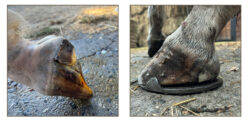
CDE 4 year old colt with a crack in the hoof after a free gallop in the field. Initially, the farrier, together with the vet, lowered the pad in the area of the crack and gave him 2 casts for 10 days each.
To find out how to help strengthen your horse’s hooves, discover our supplement CORONA® HOOF Advanced.
If you’re interested in strengthening your horse’s hooves through nutrition, discover CORONA® HOOF Advanced. Click here for more information
-
1. The influence of weather conditions on horse hoof health
2. Hoof care in older horses: how to keep hooves strong with age
3. Why is my horse lame if there doesn’t seem to be an injury?
4. Shood or barefoot: what is best for your horse?
5. Hoof care in older horses: how to keep hooves strong with age
6. How to prevent and treat thrush in horses
If you are interested in helping to strengthen your horse’s hooves through nutrition, discover CORONA® HOOF Advanced. Click here for more information.

Shood or barefoot: what is best for your horse?
Choosing between shoeing a horse or keeping it barefoot is an important decision that directly affects its wellbeing, comfort and performance. There is no one solution that works for every horse: each horse has different needs depending on the terrain it moves over, the activity it performs and the condition of its hooves.
Instead of asking which option is “better”, it is more useful to consider which one is best suited to each situation. Understanding the advantages and limitations of both approaches is the first step towards making an informed decision.
Shoeing and barefoot: two ways of caring for the hoof
Shoeing involves fitting a horseshoe, usually made of metal, to the hoof using nails. Its main purpose is to protect the hoof from wear, improve traction and, when necessary, correct conformation or certain conditions. For this reason, it is common in sport and working horses and in horses that regularly travel over hard surfaces.
Barefoot, or going without shoes, aims to preserve the natural function of the hoof without using horseshoes. This requires regular trimming and professional monitoring to maintain balanced growth and good hoof health.
Advantages of shoeing
Shoeing provides additional protection against wear, especially when a horse works on asphalt, stone or very compact ground. It can also improve grip on slippery surfaces, reducing the risk of falls during exercise.
Another advantage is that it can help correct certain conformation issues or distribute loads more effectively when injuries or pathological conditions are present. In these cases, therapeutic shoes can play an important role as part of veterinary treatment.
For competition horses or those performing intense work, shoeing can provide an extra level of safety and stability that helps maintain good performance.
Are there any disadvantages?
Yes. Poorly performed shoeing or inadequate maintenance can cause discomfort, infections, lameness or even alter the natural structure of the hoof. This is why it is essential to use a qualified farrier and have the shoes checked at the appropriate intervals.
Advantages of barefoot
eeping a horse barefoot allows the hoof to retain its full capacity for expansion and shock absorption, encouraging a more natural stride. It may also improve circulation within the hoof and contribute to strengthening its structures when the horse is suitable for barefoot management.
Another advantage is that it eliminates the risk of injuries related to nails or a poorly fitted shoe. In horses with strong hooves that live or work on suitable terrain, barefoot can be a perfectly valid option.
Things to consider
Not every horse can remain barefoot. In horses with weak hooves, those performing intense work or those regularly travelling over highly abrasive surfaces, wear may exceed the hoof’s natural growth capacity.
In addition, barefoot management requires consistent maintenance. Trimming must be carried out regularly and, in some cases, hoof boots may be necessary during training or on particularly demanding routes.
How do you choose the best option for your horse?
The decision to shoe a horse or keep it barefoot should be made on an individual basis. There is no universal formula, as each animal responds differently depending on its lifestyle and workload.
The ground makes a difference
The type of surface is one of the most important factors. Horses that regularly travel over stony tracks, asphalt or very compact arenas often benefit from shoeing, as it protects the hoof from excessive wear.
On the other hand, if a horse lives or works on pasture, sand or soft ground, barefoot can be a perfectly viable option provided the hoof is healthy and well maintained.
The horse’s activity
A competition horse does not need the same level of protection as a horse used for leisure. In disciplines such as show jumping, endurance or eventing, where speed, stability and grip are essential, shoeing often provides greater security. By contrast, many leisure, recreational dressage or lightly worked horses can perform without shoes when conditions are suitable.
Hoof condition
Hoof quality also influences the decision. A strong, balanced and well-conformed hoof generally adapts better to barefoot management, while weak, brittle or deformed hooves may need the additional protection provided by shoes.
In foals, horses with conformation problems or animals recovering from certain injuries, the veterinarian and farrier should determine the most appropriate option
Which option is generally recommended in each case?
Although every horse should be assessed individually, there are some general recommendations.
- Competition horses: shoeing is generally the safer option, as it improves traction and reduces wear during training and competition.
- Leisure horses: if they work on natural ground and have strong hooves, they can remain barefoot without problems. If they regularly travel over hard surfaces, shoeing or temporary hoof protection may be more appropriate
- Working horses: horses that perform intense work or carry loads often need shoes to protect the hoof and maintain a good level of performance.
- Horses with hoof conditions: some cases may benefit from barefoot management, while others require specific therapeutic shoes. The decision should always be made together with the veterinarian.
Practical examples
A horse that lives on a farm and goes for rides on dirt tracks will probably be able to remain barefoot with a good trimming programme.
By contrast, a show-jumping horse that trains several times a week on hard surfaces will generally need shoes to provide greater stability and protection.
There are also situations in between. A horse with fragile hooves or hooves that wear down easily may need temporary shoeing until hoof quality improves. Likewise, some horses that have worn shoes for years can gradually transition to barefoot through a well-planned process supervised by professionals.
If you are interested in helping to strengthen your horse’s hooves through nutrition, discover CORONA® HOOF Advanced. Click here for more information.
Real-life case: recovery in just 2 months
CDE 4 year old colt with a crack in the hoof after a free gallop in the field. Initially, the farrier, together with the vet, lowered the pad in the area of the crack and gave him 2 casts for 10 days each.
To find out how to help strengthen your horse’s hooves, discover our supplement CORONA® HOOF Advanced.
If you’re interested in strengthening your horse’s hooves through nutrition, discover CORONA® HOOF Advanced. Click here for more information
-
1. The influence of weather conditions on horse hoof health
2. Hoof care in older horses: how to keep hooves strong with age
3. Why is my horse lame if there doesn’t seem to be an injury?
4. Shood or barefoot: what is best for your horse?
5. Hoof care in older horses: how to keep hooves strong with age
6. How to prevent and treat thrush in horses
If you are interested in helping to strengthen your horse’s hooves through nutrition, discover CORONA® HOOF Advanced. Click here for more information.