How to prepare your dog for the sports season: training, nutrition and recovery
As the start of the season approaches, the routine of any sporting or working dog begins to change. Training sessions become longer, intensity increases and the animal’s body starts to require more than it was receiving during the months of rest. Whether we are talking about agility, canicross, mushing, working trials, rescue activities or long days working in the field, each discipline has its own demands, but they all share the same fundamental challenge: getting into shape and maintaining that condition for months.
Many owners focus solely on physical training and put nutrition and recovery on the back burner, when in reality they are the three pillars of the same foundation. A dog can be in excellent physical condition and still perform below expectations if its diet does not keep pace with the level of demand placed on it.
Why pre-season preparation makes a difference
The most common mistake is to start the season as if the dog’s body were in the same condition in which it finished the previous season. It isn’t. During periods of lower activity, some of the muscle mass and cardiovascular capacity previously gained are lost, and the body needs a period of progressive adaptation before taking on demanding training sessions.
This conditioning period is not simply about kilometres or repetitions. The body needs the right building blocks to respond to physical effort: producing energy, generating red blood cells to transport oxygen to the muscles and repairing tissue subjected to wear and tear during each session. When this nutritional foundation is inadequate, performance can suffer sooner than expected, while the risk of injury and slower recovery between training sessions may also increase.
Training: progression before intensity
The first step is to respect progression. Gradually increasing the duration or intensity of training sessions allows the cardiovascular system, tendons and joints to adapt without becoming overloaded. This is particularly important for dogs returning from a long period of inactivity or puppies starting their first competitive season.
It is also advisable to vary the training stimuli. Alternating endurance sessions with speed, technique or strength work helps build a more complete physical foundation and reduces repetitive strain on the same structures. And, of course, there needs to be room for rest: active or complete recovery days are not wasted time; they are part of the training process.
Nutrition: the fuel that supports physical effort
A dog that trains or works intensively has nutritional needs that are quite different from those of a dog with a more sedentary lifestyle. It needs more energy, but also higher levels of certain micronutrients that are directly involved in performance.
Iron is one of the most important. It is part of haemoglobin, the molecule responsible for transporting oxygen from the lungs to working muscles. If iron intake is insufficient, the muscles receive less oxygen than they need and fatigue may occur sooner than expected, even in well-trained dogs. Alongside iron, copper and B vitamins contribute to this process, playing a role in red blood cell formation and the energy metabolism that supports prolonged physical effort.
Vitamin E also deserves special mention. It supports normal muscle function and recovery, which is particularly relevant when training sessions accumulate week after week. Vitamin C, in addition to its antioxidant role, helps with iron absorption, which is why the two are often included together in formulas designed for high-performance dogs.
Recovery: what happens between training sessions
Recovery is probably the area that receives the least attention and the one that has the greatest impact on performance over the medium term. A muscle that does not recover properly between sessions accumulates fatigue, becomes less efficient and is more susceptible to injury.
Getting enough sleep, maintaining good hydration and respecting rest days are the foundation. Beyond this, attention should be paid to post-exercise nutrition, ensuring that the body has what it needs to repair tissue and replenish reserves. A dog that recovers well can sustain a long season without significant dips in performance; one that does not will eventually show the effects of accumulated fatigue.
A preparation plan with all three pillars in balance
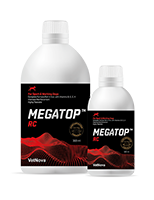
Products such as MEGATOP™ RC (product page link) are specifically designed to help provide additional iron, copper and vitamins B, E and C for dogs facing a high workload. It is a concentrated liquid formula that can be adapted to both intensive training and daily maintenance, depending on the needs of each stage of the season. It does not replace a balanced diet or a well-designed training plan, but it can be a useful support to help maintain this balance when physical demands increase.
Ultimately, preparing a dog for the sports season is no different from preparing any athlete: it requires well-planned training, nutrition that supports physical effort and adequate recovery time. When these three elements are properly balanced, the dog not only performs better during a competition or working day, but also reaches the end of the season with greater reserves. That is when the difference between a well-prepared animal and one that has been relying on its reserves really becomes apparent.
Talking to your veterinarian or physical trainer about your dog’s specific needs, taking into account its discipline, age and history, remains the best starting point before introducing any changes to its routine or diet.
Discover more about conoce MEGATOP™ RC Líquido and our range of products for sporting dogs.
How to prepare your dog for the sports season: training, nutrition and recovery
As the start of the season approaches, the routine of any sporting or working dog begins to change. Training sessions become longer, intensity increases and the animal’s body starts to require more than it was receiving during the months of rest. Whether we are talking about agility, canicross, mushing, working trials, rescue activities or long days working in the field, each discipline has its own demands, but they all share the same fundamental challenge: getting into shape and maintaining that condition for months.
Many owners focus solely on physical training and put nutrition and recovery on the back burner, when in reality they are the three pillars of the same foundation. A dog can be in excellent physical condition and still perform below expectations if its diet does not keep pace with the level of demand placed on it.
Why pre-season preparation makes a difference
The most common mistake is to start the season as if the dog’s body were in the same condition in which it finished the previous season. It isn’t. During periods of lower activity, some of the muscle mass and cardiovascular capacity previously gained are lost, and the body needs a period of progressive adaptation before taking on demanding training sessions.
This conditioning period is not simply about kilometres or repetitions. The body needs the right building blocks to respond to physical effort: producing energy, generating red blood cells to transport oxygen to the muscles and repairing tissue subjected to wear and tear during each session. When this nutritional foundation is inadequate, performance can suffer sooner than expected, while the risk of injury and slower recovery between training sessions may also increase.
Training: progression before intensity
The first step is to respect progression. Gradually increasing the duration or intensity of training sessions allows the cardiovascular system, tendons and joints to adapt without becoming overloaded. This is particularly important for dogs returning from a long period of inactivity or puppies starting their first competitive season.
It is also advisable to vary the training stimuli. Alternating endurance sessions with speed, technique or strength work helps build a more complete physical foundation and reduces repetitive strain on the same structures. And, of course, there needs to be room for rest: active or complete recovery days are not wasted time; they are part of the training process.
Nutrition: the fuel that supports physical effort
A dog that trains or works intensively has nutritional needs that are quite different from those of a dog with a more sedentary lifestyle. It needs more energy, but also higher levels of certain micronutrients that are directly involved in performance.
Iron is one of the most important. It is part of haemoglobin, the molecule responsible for transporting oxygen from the lungs to working muscles. If iron intake is insufficient, the muscles receive less oxygen than they need and fatigue may occur sooner than expected, even in well-trained dogs. Alongside iron, copper and B vitamins contribute to this process, playing a role in red blood cell formation and the energy metabolism that supports prolonged physical effort.
Vitamin E also deserves special mention. It supports normal muscle function and recovery, which is particularly relevant when training sessions accumulate week after week. Vitamin C, in addition to its antioxidant role, helps with iron absorption, which is why the two are often included together in formulas designed for high-performance dogs.
Recovery: what happens between training sessions
Recovery is probably the area that receives the least attention and the one that has the greatest impact on performance over the medium term. A muscle that does not recover properly between sessions accumulates fatigue, becomes less efficient and is more susceptible to injury.
Getting enough sleep, maintaining good hydration and respecting rest days are the foundation. Beyond this, attention should be paid to post-exercise nutrition, ensuring that the body has what it needs to repair tissue and replenish reserves. A dog that recovers well can sustain a long season without significant dips in performance; one that does not will eventually show the effects of accumulated fatigue.
A preparation plan with all three pillars in balance
Products such as MEGATOP™ RC (product page link) are specifically designed to help provide additional iron, copper and vitamins B, E and C for dogs facing a high workload. It is a concentrated liquid formula that can be adapted to both intensive training and daily maintenance, depending on the needs of each stage of the season. It does not replace a balanced diet or a well-designed training plan, but it can be a useful support to help maintain this balance when physical demands increase.
Ultimately, preparing a dog for the sports season is no different from preparing any athlete: it requires well-planned training, nutrition that supports physical effort and adequate recovery time. When these three elements are properly balanced, the dog not only performs better during a competition or working day, but also reaches the end of the season with greater reserves. That is when the difference between a well-prepared animal and one that has been relying on its reserves really becomes apparent.
Talking to your veterinarian or physical trainer about your dog’s specific needs, taking into account its discipline, age and history, remains the best starting point before introducing any changes to its routine or diet.
Discover more about conoce MEGATOP™ RC Líquido and our range of products for sporting dogs.