Mushing: how to prepare your dog to start training again after the summer
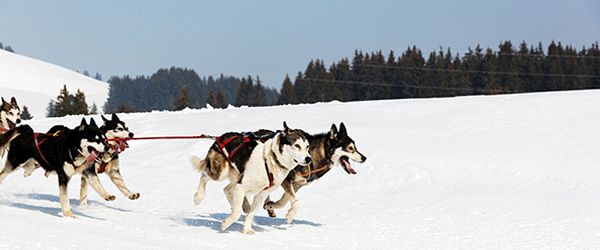
For most mushing teams, summer is an enforced break. High temperatures make training with a cart, bike or even on foot inadvisable for dogs that are genetically adapted to cold weather and sustained physical effort. But as temperatures drop, it is time to resume activity, and this is where many mushers make the same mistake: trying to regain in two weeks the level that took months to build during the previous season.
The body does not simply return to where you left off
After several months of rest or greatly reduced activity, the cardiovascular system, muscles and joints of a mushing dog are not in the same condition as they were at the end of the previous season. Some muscle tone is lost, the working capacity of the heart and lungs decreases, and structures that previously handled kilometres of pulling without difficulty need time to readapt.
This is not exclusive to dogs: it happens to any athlete who interrupts their activity for a long period. The difference is that mushing involves prolonged endurance and pulling, placing a constant and repetitive load on the joints, shoulders, elbows and carpal joints. Resuming activity too quickly, without an appropriate progression, is one of the most common causes of injuries at the start of the season.
A gradual return, session by session
The most sensible approach is to start with short sessions at an easy pace, gradually increasing distance and intensity over several weeks. There is no single formula that works for every team, as this depends on each dog’s age, history and how much activity it maintained during the summer. However, the underlying principle is always the same: give the body time to adapt before asking it to perform at 100%.
During these first few weeks, it is also important to pay close attention to how each dog responds. Mild fatigue after training is normal, but signs such as lameness, stiffness the following day or reluctance to get into harness may indicate that the rate of progression is too demanding for that particular dog.
The joints: the area under the greatest strain
If there is one part of the body that deserves special attention in a mushing dog, it is the joints. Sustained pulling places continuous stress on the joint cartilage and, over the years, this wear can lead to discomfort that limits performance, particularly in dogs that have been competing or working for several seasons.
This is where Omega-3 fatty acids, particularly DHA and EPA, come into play. Their role in supporting the health of the musculoskeletal system is well documented. They not only contribute to joint health but also support cardiovascular function, which is particularly relevant in a discipline that places such high demands on the heart and lungs as well as the muscles and joints.
Nutrition and hydration: silent allies
Alongside joint health, it is important not to overlook overall nutritional needs. A dog returning to mushing needs sufficient energy to sustain physical effort, but also the micronutrients that allow that effort to translate into real performance: iron and B vitamins for energy metabolism and red blood cell production, antioxidants to help manage the oxidative stress associated with intense exercise, and adequate hydration before, during and after every session.
Autumn, with its lower temperatures, may make us think that the risk of dehydration is lower than in summer. However, intense exercise still causes fluid losses that need to be replenished, especially during long sessions.
Patience at the beginning, performance at the end
Returning to training after the summer is not a race against the clock, although it may sometimes feel that way as the date of the first event approaches. The teams that perform best halfway through the season are often those that spent the first few weeks building a solid foundation, without rushing, while taking care of both training and each dog’s recovery.
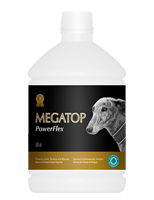
A supplement such as MEGATOP™ PowerFlex (product page link) can be a useful tool as part of a return-to-training routine. It is a cold-extracted fish oil concentrated in DHA and EPA, with vitamins A and D3, designed to support both the musculoskeletal system and cardiovascular function in high-performance dogs. It can form part of a preparation strategy ahead of a long and demanding season.
If you have any doubts about the most appropriate progression rate for your team, or notice that a dog is not responding as expected, consulting your veterinarian before continuing to increase the workload is always the safest choice.
Discover more about conoce MEGATOP™ PowerFlex and our range of products for sporting dogs.
Mushing: how to prepare your dog to start training again after the summer
For most mushing teams, summer is an enforced break. High temperatures make training with a cart, bike or even on foot inadvisable for dogs that are genetically adapted to cold weather and sustained physical effort. But as temperatures drop, it is time to resume activity, and this is where many mushers make the same mistake: trying to regain in two weeks the level that took months to build during the previous season.
The body does not simply return to where you left off
After several months of rest or greatly reduced activity, the cardiovascular system, muscles and joints of a mushing dog are not in the same condition as they were at the end of the previous season. Some muscle tone is lost, the working capacity of the heart and lungs decreases, and structures that previously handled kilometres of pulling without difficulty need time to readapt.
This is not exclusive to dogs: it happens to any athlete who interrupts their activity for a long period. The difference is that mushing involves prolonged endurance and pulling, placing a constant and repetitive load on the joints, shoulders, elbows and carpal joints. Resuming activity too quickly, without an appropriate progression, is one of the most common causes of injuries at the start of the season.
A gradual return, session by session
The most sensible approach is to start with short sessions at an easy pace, gradually increasing distance and intensity over several weeks. There is no single formula that works for every team, as this depends on each dog’s age, history and how much activity it maintained during the summer. However, the underlying principle is always the same: give the body time to adapt before asking it to perform at 100%.
During these first few weeks, it is also important to pay close attention to how each dog responds. Mild fatigue after training is normal, but signs such as lameness, stiffness the following day or reluctance to get into harness may indicate that the rate of progression is too demanding for that particular dog.
The joints: the area under the greatest strain
If there is one part of the body that deserves special attention in a mushing dog, it is the joints. Sustained pulling places continuous stress on the joint cartilage and, over the years, this wear can lead to discomfort that limits performance, particularly in dogs that have been competing or working for several seasons.
This is where Omega-3 fatty acids, particularly DHA and EPA, come into play. Their role in supporting the health of the musculoskeletal system is well documented. They not only contribute to joint health but also support cardiovascular function, which is particularly relevant in a discipline that places such high demands on the heart and lungs as well as the muscles and joints.
Nutrition and hydration: silent allies
Alongside joint health, it is important not to overlook overall nutritional needs. A dog returning to mushing needs sufficient energy to sustain physical effort, but also the micronutrients that allow that effort to translate into real performance: iron and B vitamins for energy metabolism and red blood cell production, antioxidants to help manage the oxidative stress associated with intense exercise, and adequate hydration before, during and after every session.
Autumn, with its lower temperatures, may make us think that the risk of dehydration is lower than in summer. However, intense exercise still causes fluid losses that need to be replenished, especially during long sessions.
Patience at the beginning, performance at the end
Returning to training after the summer is not a race against the clock, although it may sometimes feel that way as the date of the first event approaches. The teams that perform best halfway through the season are often those that spent the first few weeks building a solid foundation, without rushing, while taking care of both training and each dog’s recovery.
A supplement such as MEGATOP™ PowerFlex (product page link) can be a useful tool as part of a return-to-training routine. It is a cold-extracted fish oil concentrated in DHA and EPA, with vitamins A and D3, designed to support both the musculoskeletal system and cardiovascular function in high-performance dogs. It can form part of a preparation strategy ahead of a long and demanding season.
If you have any doubts about the most appropriate progression rate for your team, or notice that a dog is not responding as expected, consulting your veterinarian before continuing to increase the workload is always the safest choice.
Discover more about conoce MEGATOP™ PowerFlex and our range of products for sporting dogs.