Muscles and joints in sporting dogs: key factors for maintaining performance
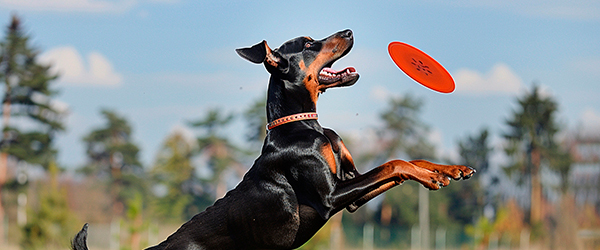
When we think about the performance of a sporting dog, we tend to focus on what is most obvious: speed, endurance and the enthusiasm with which it approaches each training session. But behind all of this are two structures that work tirelessly and, when they fail, affect everything else: the muscles and joints. Looking after them is not just about preventing long-term injuries; it is a fundamental part of maintaining performance session after session.
The wear and tear you cannot always see
Intense and repeated exercise, typical of any sporting or working discipline, places constant demands on muscle tissue and joint cartilage. This is a normal process: the body adapts to exercise by repairing this wear and becoming stronger. However, when the demands exceed the body’s ability to recover, or when nutritional support does not adequately accompany the repair process, problems can begin to appear: stiffness, discomfort after exercise, a gradual decline in performance or, in more advanced cases, injuries that require the dog to stop training.
This is particularly relevant in dogs that have already undergone several seasons of intense activity. Joint wear is cumulative and, although it does not always produce obvious early signs, it can progressively affect the dog’s functional capacity over time.
The role of Omega-3s in joint health
Among the nutrients that influence musculoskeletal health, Omega-3 fatty acids, particularly DHA and EPA, play an important role. Their contribution to maintaining joint structures is well supported, which is why they are a common component of nutritional strategies designed for high-performance dogs.
Beyond the joints, these fatty acids also play a relevant role in cardiovascular function, something that is not always considered when discussing sporting performance but is fundamental: a healthy heart and circulatory system provide the foundation for delivering oxygen efficiently to every working muscle.
Caring for the muscles, not just the joints
Although joints tend to receive most of the attention, muscles deserve the same level of care. Well-nourished muscles recover more quickly between sessions, are less prone to micro-injuries and are better able to sustain repeated effort throughout a long season.
Vitamin E plays an important role here, supporting normal muscle function and recovery, particularly during periods of intense training when wear and tear is constant. And although this article focuses on muscles and joints, it is worth remembering that energy production and adequate oxygen supply to muscle tissue — processes in which iron and B vitamins play a role — also directly influence how muscles respond to exercise.
Prevention before treatment
The most effective strategy for managing muscle and joint wear is not to wait for discomfort to appear, but to take a preventive approach from the beginning of the season. This includes a training plan that respects progression and rest periods, regular monitoring of the dog’s physical condition, especially in dogs that have competed for several seasons, and nutritional support that helps meet the demands associated with intense exercise.
When obvious discomfort, lameness or clear changes in the dog’s movement are already present, the appropriate course of action is to consult a veterinarian for a proper assessment rather than trying to manage the problem solely through supplementation. Nutrition is a supportive and preventive tool, not a substitute for veterinary diagnosis and treatment when a problem has already developed.
A foundation that supports the entire season
The dogs that maintain their performance best throughout a long season are not necessarily the fastest or strongest at the beginning, but those that reach the end in the best physical condition, without carrying injuries or accumulated wear and tear. Taking care of muscles and joints from day one, combining well-planned training with appropriate nutritional support, is one of the most worthwhile investments that can be made in any dog’s sporting career.
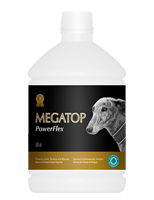
A product such as MEGATOP™ PowerFlex (product page link), a cold-extracted fish oil concentrated in DHA and EPA, together with vitamins A and D3, is specifically formulated with this dual purpose in mind: supporting the musculoskeletal system and cardiovascular function in dogs that train or work intensively. Because it is cold-extracted, without chemical processing or high temperatures, it helps preserve the quality of the fatty acids compared with more aggressive extraction processes.
Discover more about conoce MEGATOP Powerflex and our range of products for sporting dogs.
Muscles and joints in sporting dogs: key factors for maintaining performance
When we think about the performance of a sporting dog, we tend to focus on what is most obvious: speed, endurance and the enthusiasm with which it approaches each training session. But behind all of this are two structures that work tirelessly and, when they fail, affect everything else: the muscles and joints. Looking after them is not just about preventing long-term injuries; it is a fundamental part of maintaining performance session after session.
The wear and tear you cannot always see
Intense and repeated exercise, typical of any sporting or working discipline, places constant demands on muscle tissue and joint cartilage. This is a normal process: the body adapts to exercise by repairing this wear and becoming stronger. However, when the demands exceed the body’s ability to recover, or when nutritional support does not adequately accompany the repair process, problems can begin to appear: stiffness, discomfort after exercise, a gradual decline in performance or, in more advanced cases, injuries that require the dog to stop training.
This is particularly relevant in dogs that have already undergone several seasons of intense activity. Joint wear is cumulative and, although it does not always produce obvious early signs, it can progressively affect the dog’s functional capacity over time.
The role of Omega-3s in joint health
Among the nutrients that influence musculoskeletal health, Omega-3 fatty acids, particularly DHA and EPA, play an important role. Their contribution to maintaining joint structures is well supported, which is why they are a common component of nutritional strategies designed for high-performance dogs.
Beyond the joints, these fatty acids also play a relevant role in cardiovascular function, something that is not always considered when discussing sporting performance but is fundamental: a healthy heart and circulatory system provide the foundation for delivering oxygen efficiently to every working muscle.
Caring for the muscles, not just the joints
Although joints tend to receive most of the attention, muscles deserve the same level of care. Well-nourished muscles recover more quickly between sessions, are less prone to micro-injuries and are better able to sustain repeated effort throughout a long season.
Vitamin E plays an important role here, supporting normal muscle function and recovery, particularly during periods of intense training when wear and tear is constant. And although this article focuses on muscles and joints, it is worth remembering that energy production and adequate oxygen supply to muscle tissue — processes in which iron and B vitamins play a role — also directly influence how muscles respond to exercise.
Prevention before treatment
The most effective strategy for managing muscle and joint wear is not to wait for discomfort to appear, but to take a preventive approach from the beginning of the season. This includes a training plan that respects progression and rest periods, regular monitoring of the dog’s physical condition, especially in dogs that have competed for several seasons, and nutritional support that helps meet the demands associated with intense exercise.
When obvious discomfort, lameness or clear changes in the dog’s movement are already present, the appropriate course of action is to consult a veterinarian for a proper assessment rather than trying to manage the problem solely through supplementation. Nutrition is a supportive and preventive tool, not a substitute for veterinary diagnosis and treatment when a problem has already developed.
A foundation that supports the entire season
The dogs that maintain their performance best throughout a long season are not necessarily the fastest or strongest at the beginning, but those that reach the end in the best physical condition, without carrying injuries or accumulated wear and tear. Taking care of muscles and joints from day one, combining well-planned training with appropriate nutritional support, is one of the most worthwhile investments that can be made in any dog’s sporting career.
A product such as MEGATOP™ PowerFlex (product page link), a cold-extracted fish oil concentrated in DHA and EPA, together with vitamins A and D3, is specifically formulated with this dual purpose in mind: supporting the musculoskeletal system and cardiovascular function in dogs that train or work intensively. Because it is cold-extracted, without chemical processing or high temperatures, it helps preserve the quality of the fatty acids compared with more aggressive extraction processes.
Discover more about conoce MEGATOP Powerflex and our range of products for sporting dogs.