Iron and B vitamins in working dogs: what role do they play in performance?
When discussing nutrition for sporting or working dogs, it is easy for the conversation to quickly turn to proteins or fats, leaving two less visible but equally important allies in the background: iron and B vitamins. Their role may not be as obvious as that of other nutrients, but their absence can have a significant impact on the performance of any dog subjected to demanding physical activity.
Iron: the oxygen transporter
To understand why iron is so important in a working dog, we need to look at what happens inside the muscles during exercise. Every muscle contraction requires oxygen to produce energy efficiently, and this oxygen is transported through the blood by haemoglobin, a protein found in red blood cells that depends directly on iron to function.
When iron intake is insufficient, the blood’s ability to transport oxygen is reduced. The practical consequence is clear: the muscles work with less available oxygen, fatigue sets in earlier and performance declines, even in dogs that are well trained and appear to be in good physical condition. This effect is sometimes incorrectly attributed to a lack of fitness, when the underlying cause may actually be insufficient nutritional intake.
Working and sporting dogs involved in herding, hunting, search and rescue, or endurance disciplines such as mushing and canicross have greater iron requirements than dogs with a more sedentary lifestyle, precisely because the oxygen demands of their muscles are much higher and more constant.
B vitamins: the engine of energy metabolism
If iron helps ensure that oxygen reaches the muscles, B vitamins are involved in converting that oxygen and the available nutrients into usable energy. Vitamins B1, B2, B3, B6 and B12 are involved in different stages of cellular energy metabolism, and a deficiency in any of them can limit the body’s ability to sustain physical effort efficiently.
This is particularly relevant in dogs that work or train regularly over long seasons, when metabolic demands are continuous and the body’s reserves need to be replenished on an ongoing basis. A deficiency that might go unnoticed in a dog with a quiet lifestyle can translate, in a working dog, into earlier fatigue, slower recovery between working days or performance below expectations.
A team that works better together
Iron and B vitamins do not act in isolation and are often combined with other nutrients that support their function. Copper, for example, is necessary for the body to use available iron correctly. Vitamin C improves iron absorption in the intestine. Vitamin E provides additional support for normal muscle function and recovery, completing a nutritional profile specifically designed to meet the demands of a working or sporting dog.
Not everything can be solved with supplementation
It is important to be realistic: iron and B vitamins are important components, but they are not a magic solution. A dog with an unbalanced diet, poorly planned training or an underlying health problem will not resolve poor performance simply by receiving additional amounts of these nutrients. Supplementation makes sense as part of a broader strategy that includes a diet properly adapted to the dog’s activity level and a training plan consistent with its physical condition.
If a dog shows persistent signs of fatigue, poor performance or slow recovery despite appropriate preparation, the most sensible course of action is to consult a veterinarian. Blood tests can determine whether there is a genuine deficiency of iron or other nutrients and, based on the results, help establish the most appropriate nutritional strategy for that particular dog.
Small nutrients, big impact
Iron and B vitamins are not usually the stars of conversations about canine performance, but their role is so fundamental that their absence can quickly become noticeable in the field. Giving them the attention they deserve, as part of a well-planned nutritional strategy, is one of those decisions that may not be immediately visible but can make the difference between a dog that simply gets through the season and one that maintains its performance with a margin to spare.
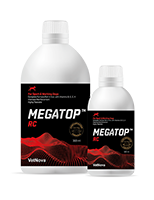
This is the thinking behind formulas such as MEGATOP™ RC (product page link), a concentrated liquid supplement containing iron, copper and vitamins B, E and C, designed for dogs undertaking intense training, competition or demanding working activities such as herding, hunting or search-and-rescue trials. Its formulation allows the dose to be adjusted according to the stage of the season, from daily maintenance to additional support during more demanding training or competition periods, making it easier to adapt to each dog’s actual needs at every stage.
Discover more about conoce MEGATOP™ RC Líquido and our range of products for sporting dogs.
Iron and B vitamins in working dogs: what role do they play in performance?
When discussing nutrition for sporting or working dogs, it is easy for the conversation to quickly turn to proteins or fats, leaving two less visible but equally important allies in the background: iron and B vitamins. Their role may not be as obvious as that of other nutrients, but their absence can have a significant impact on the performance of any dog subjected to demanding physical activity.
Iron: the oxygen transporter
To understand why iron is so important in a working dog, we need to look at what happens inside the muscles during exercise. Every muscle contraction requires oxygen to produce energy efficiently, and this oxygen is transported through the blood by haemoglobin, a protein found in red blood cells that depends directly on iron to function.
When iron intake is insufficient, the blood’s ability to transport oxygen is reduced. The practical consequence is clear: the muscles work with less available oxygen, fatigue sets in earlier and performance declines, even in dogs that are well trained and appear to be in good physical condition. This effect is sometimes incorrectly attributed to a lack of fitness, when the underlying cause may actually be insufficient nutritional intake.
Working and sporting dogs involved in herding, hunting, search and rescue, or endurance disciplines such as mushing and canicross have greater iron requirements than dogs with a more sedentary lifestyle, precisely because the oxygen demands of their muscles are much higher and more constant.
B vitamins: the engine of energy metabolism
If iron helps ensure that oxygen reaches the muscles, B vitamins are involved in converting that oxygen and the available nutrients into usable energy. Vitamins B1, B2, B3, B6 and B12 are involved in different stages of cellular energy metabolism, and a deficiency in any of them can limit the body’s ability to sustain physical effort efficiently.
This is particularly relevant in dogs that work or train regularly over long seasons, when metabolic demands are continuous and the body’s reserves need to be replenished on an ongoing basis. A deficiency that might go unnoticed in a dog with a quiet lifestyle can translate, in a working dog, into earlier fatigue, slower recovery between working days or performance below expectations.
A team that works better together
Iron and B vitamins do not act in isolation and are often combined with other nutrients that support their function. Copper, for example, is necessary for the body to use available iron correctly. Vitamin C improves iron absorption in the intestine. Vitamin E provides additional support for normal muscle function and recovery, completing a nutritional profile specifically designed to meet the demands of a working or sporting dog.
Not everything can be solved with supplementation
It is important to be realistic: iron and B vitamins are important components, but they are not a magic solution. A dog with an unbalanced diet, poorly planned training or an underlying health problem will not resolve poor performance simply by receiving additional amounts of these nutrients. Supplementation makes sense as part of a broader strategy that includes a diet properly adapted to the dog’s activity level and a training plan consistent with its physical condition.
If a dog shows persistent signs of fatigue, poor performance or slow recovery despite appropriate preparation, the most sensible course of action is to consult a veterinarian. Blood tests can determine whether there is a genuine deficiency of iron or other nutrients and, based on the results, help establish the most appropriate nutritional strategy for that particular dog.
Small nutrients, big impact
Iron and B vitamins are not usually the stars of conversations about canine performance, but their role is so fundamental that their absence can quickly become noticeable in the field. Giving them the attention they deserve, as part of a well-planned nutritional strategy, is one of those decisions that may not be immediately visible but can make the difference between a dog that simply gets through the season and one that maintains its performance with a margin to spare.
This is the thinking behind formulas such as MEGATOP™ RC (product page link), a concentrated liquid supplement containing iron, copper and vitamins B, E and C, designed for dogs undertaking intense training, competition or demanding working activities such as herding, hunting or search-and-rescue trials. Its formulation allows the dose to be adjusted according to the stage of the season, from daily maintenance to additional support during more demanding training or competition periods, making it easier to adapt to each dog’s actual needs at every stage.
Discover more about conoce MEGATOP™ RC Líquido and our range of products for sporting dogs.