

Essential summer skin care for your horse: avoiding common problems
For those of us who live day to day between stables and training arenas, the arrival of summer is a double-edged sword. On the one hand, we enjoy longer days and rides in the sunshine; on the other, we face the constant challenge of protecting our companions from the rigours of the heat. Although the horse’s skin may appear robust, it is an extremely sensitive system that reacts quickly to external aggressors.
Keeping the skin healthy is not just a matter of aesthetics for looking your best at a competition. Irritated skin can directly affect a horse’s temperament, concentration and wellbeing and, in severe cases, its overall health. In this article, we break down how to care for equine skin health during the summer months.
1. Understanding summer skin problems in horses
Summer exposes the horse’s skin to “multifactorial stress”: intense ultraviolet radiation, excessive sweating, increased insect activity and dry environmental conditions. Our hands are the first diagnostic tool: when grooming, we are not only removing dust; we are performing a tactile examination that can detect problems before they become chronic.
Skin health is, in essence, the first immune barrier. If this barrier is compromised by poor management or excessive exposure to summer pathogens, the horse’s performance can decline sharply. Therefore, understanding what is happening beneath the coat is essential for enjoying a trouble-free season.
2. Understanding Equine Summer Dermatitis
The most characteristic summer skin condition is undoubtedly Equine Summer Dermatitis (ESD), also known as hypersensitivity to insect bites. It is not simply a nuisance caused by mosquitoes; it is an immune-mediated allergic reaction.
How can you identify it early?
The signs usually follow a very clear clinical pattern that any rider can recognise:
- Target areas: the areas of the body most commonly affected include the mane, base of the tail, topline and abdomen, where bites can cause a stronger reaction.
- The “itch-scratch effect”: intense itching leads the horse to rub itself repeatedly, causing hair loss, irritation and possible wounds.
- Thickening of the skin.
Click here to discover more about Equine Summer Dermatitis.
3. Tips to relieve itching in horses
Once the horse has entered the “itch-scratch-lesion” cycle, immediate relief becomes a humanitarian and health priority. A horse that scratches until it bleeds is experiencing acute stress that raises cortisol levels.
Cleaning is the first step, but with some considerations. Sweat is rich in salts and lactate, substances that irritate already sensitised skin and can also act as a beacon for insects.
- Water-only showers: After exercise, make sure you remove every trace of sweat.
- Therapeutic shampoos: On alternate days, use products that help soothe the skin without stripping away its protective lipid layer.
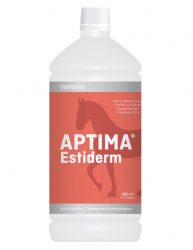
Veterinary medicine also recommends topical solutions that fulfil three functions: soothing, moisturising and regenerating. In this context, products such as APTIMA Estiderm Shampoo and Spray have become essential items in a summer first-aid kit. These types of lotions are formulated to restore the integrity of the skin barrier.
Direct application to affected areas (mane, back and tail) helps reduce local inflammation and provides immediate relief from itching, breaking the scratching cycle. In addition, by keeping the skin moisturised, it becomes more difficult for allergens to penetrate the deeper layers.
Evidence in practice: click here to see the APTIMA® Estiderm clinical case and its demonstrated efficacy.
4. How to prevent dermatitis flare-ups in horses
Once the acute flare-up improves, the real work begins: preventing it from returning. Prevention is not a “one-off treatment”, but a daily routine.
- Environmental management: Culicoides have clear habits, and we can use them to our advantage.
- Avoid critical hours: They are most active at dawn and dusk. If possible, stable the horse during these periods.
- Physical barriers: Dense-weave eczema blankets remain the most effective way to prevent contact with mosquito saliva.
- Humidity control: Remove puddles and areas of standing water near the stable; they are ideal breeding sites.
5. Strengthening from within: a balanced immune system reacts less.
A balanced immune system helps reduce skin reactivity and improve the horse’s inflammatory response.
- Omega-3: Flaxseed oil provides a plant-based source rich in alpha-linolenic acid, while fish oil provides EPA and DHA, which have a more direct and bioavailable action, contributing to better modulation of skin inflammation.
- Antioxidants: Vitamin E and selenium support the repair of damaged skin, improving skin health from within.
6. Other skin diseases in horses during summer
Heat brings more problems than summer dermatitis, and it is worth recognising them early.
- Contact dermatitis: Sometimes the culprit is something we apply ourselves: strong repellents, fabric softeners used on saddle pads or even pasture plants. It usually appears as hives or redness exactly where contact occurs. The key is to identify and remove the agent, cleaning the area with cold water and mild soap.
- Photosensitisation: It may look like sunburn, but it is more serious. It can occur when the horse ingests plants such as St John’s wort or has liver problems. White areas become inflamed, painful and develop scabs. In this case, provide full shade and consult a veterinarian.
- Fungal infections (ringworm): Heat + moisture under a blanket or saddle create the perfect environment for fungi. They can be recognised by circular areas of hair loss and mild scaling. The best prevention is simple: consistent equipment hygiene, especially saddle pads.
7. Conclusion
Summer does not have to be a torture of itching and hairless tails. The key lies in anticipation. On the one hand, intelligent environmental management and the use of specialised topical products (shampoos and sprays) are essential to soothe and control early flare-ups. On the other, nutritional support through an appropriate diet rich in fatty acids, biotin, zinc, L-cysteine and vitamins, or supplements such as APTIMA® Estiderm, helps strengthen the skin from within. By combining both approaches, we can help ensure that our horse gets through the summer season more comfortably.
As riders, we know our horses better than anyone. A simple change in the way they shake themselves or a small skin reaction is their way of telling us that something is not right. Science gives us the tools, but our daily observation is what makes the difference between a horse that suffers through summer and one that enjoys it.
If you are interested in helping to improve the condition of your horse’s skin, get to know conoce APTIMA® Estiderm
Essential summer skin care for your horse: avoiding common problems
For those of us who live day to day between stables and training arenas, the arrival of summer is a double-edged sword. On the one hand, we enjoy longer days and rides in the sunshine; on the other, we face the constant challenge of protecting our companions from the rigours of the heat. Although the horse’s skin may appear robust, it is an extremely sensitive system that reacts quickly to external aggressors.
Keeping the skin healthy is not just a matter of aesthetics for looking your best at a competition. Irritated skin can directly affect a horse’s temperament, concentration and wellbeing and, in severe cases, its overall health. In this article, we break down how to care for equine skin health during the summer months.
1. Understanding summer skin problems in horses
Summer exposes the horse’s skin to “multifactorial stress”: intense ultraviolet radiation, excessive sweating, increased insect activity and dry environmental conditions. Our hands are the first diagnostic tool: when grooming, we are not only removing dust; we are performing a tactile examination that can detect problems before they become chronic.
Skin health is, in essence, the first immune barrier. If this barrier is compromised by poor management or excessive exposure to summer pathogens, the horse’s performance can decline sharply. Therefore, understanding what is happening beneath the coat is essential for enjoying a trouble-free season.
2. Understanding Equine Summer Dermatitis
The most characteristic summer skin condition is undoubtedly Equine Summer Dermatitis (ESD), also known as hypersensitivity to insect bites. It is not simply a nuisance caused by mosquitoes; it is an immune-mediated allergic reaction.
How can you identify it early?
The signs usually follow a very clear clinical pattern that any rider can recognise:
- Target areas: the areas of the body most commonly affected include the mane, base of the tail, topline and abdomen, where bites can cause a stronger reaction.
- The “itch-scratch effect”: intense itching leads the horse to rub itself repeatedly, causing hair loss, irritation and possible wounds.
- Thickening of the skin.
Click here to discover more about Equine Summer Dermatitis.
3. Tips to relieve itching in horses
Once the horse has entered the “itch-scratch-lesion” cycle, immediate relief becomes a humanitarian and health priority. A horse that scratches until it bleeds is experiencing acute stress that raises cortisol levels.
Cleaning is the first step, but with some considerations. Sweat is rich in salts and lactate, substances that irritate already sensitised skin and can also act as a beacon for insects.
- Water-only showers: After exercise, make sure you remove every trace of sweat.
- Therapeutic shampoos: On alternate days, use products that help soothe the skin without stripping away its protective lipid layer.
Veterinary medicine also recommends topical solutions that fulfil three functions: soothing, moisturising and regenerating. In this context, products such as APTIMA Estiderm Shampoo and Spray have become essential items in a summer first-aid kit. These types of lotions are formulated to restore the integrity of the skin barrier.
Direct application to affected areas (mane, back and tail) helps reduce local inflammation and provides immediate relief from itching, breaking the scratching cycle. In addition, by keeping the skin moisturised, it becomes more difficult for allergens to penetrate the deeper layers.
Evidence in practice: click here to see the APTIMA® Estiderm clinical case and its demonstrated efficacy.
4. How to prevent dermatitis flare-ups in horses
Once the acute flare-up improves, the real work begins: preventing it from returning. Prevention is not a “one-off treatment”, but a daily routine.
- Environmental management: Culicoides have clear habits, and we can use them to our advantage.
- Avoid critical hours: They are most active at dawn and dusk. If possible, stable the horse during these periods.
- Physical barriers: Dense-weave eczema blankets remain the most effective way to prevent contact with mosquito saliva.
- Humidity control: Remove puddles and areas of standing water near the stable; they are ideal breeding sites.
5. Strengthening from within: a balanced immune system reacts less.
A balanced immune system helps reduce skin reactivity and improve the horse’s inflammatory response.
- Omega-3: Flaxseed oil provides a plant-based source rich in alpha-linolenic acid, while fish oil provides EPA and DHA, which have a more direct and bioavailable action, contributing to better modulation of skin inflammation.
- Antioxidants: Vitamin E and selenium support the repair of damaged skin, improving skin health from within.
6. Other skin diseases in horses during summer
Heat brings more problems than summer dermatitis, and it is worth recognising them early.
- Contact dermatitis: Sometimes the culprit is something we apply ourselves: strong repellents, fabric softeners used on saddle pads or even pasture plants. It usually appears as hives or redness exactly where contact occurs. The key is to identify and remove the agent, cleaning the area with cold water and mild soap.
- Photosensitisation: It may look like sunburn, but it is more serious. It can occur when the horse ingests plants such as St John’s wort or has liver problems. White areas become inflamed, painful and develop scabs. In this case, provide full shade and consult a veterinarian.
- Fungal infections (ringworm): Heat + moisture under a blanket or saddle create the perfect environment for fungi. They can be recognised by circular areas of hair loss and mild scaling. The best prevention is simple: consistent equipment hygiene, especially saddle pads.
7. Conclusion
Summer does not have to be a torture of itching and hairless tails. The key lies in anticipation. On the one hand, intelligent environmental management and the use of specialised topical products (shampoos and sprays) are essential to soothe and control early flare-ups. On the other, nutritional support through an appropriate diet rich in fatty acids, biotin, zinc, L-cysteine and vitamins, or supplements such as APTIMA® Estiderm, helps strengthen the skin from within. By combining both approaches, we can help ensure that our horse gets through the summer season more comfortably.
As riders, we know our horses better than anyone. A simple change in the way they shake themselves or a small skin reaction is their way of telling us that something is not right. Science gives us the tools, but our daily observation is what makes the difference between a horse that suffers through summer and one that enjoys it.
If you are interested in helping to improve the condition of your horse’s skin, get to know conoce APTIMA® Estiderm