

The skin as a mirror of health: A guide to preventing equine skin allergies
As riders, we spend hours grooming, observing and caring for our horses. This physical connection allows us to notice the smallest change: a new lump, a patch of hair loss or that persistent scratching against the paddock post that immediately puts us on alert. Skin allergies in horses are not just a cosmetic issue; they can be a sign that the immune system is fighting an internal battle.
Preventing dermatitis and other reactions is not a matter of luck, but of a strategy based on science and attentive management. Below, we explore how to protect the skin health of your equine companion.
1. The horse’s skin barrier
The skin is the horse’s largest organ and its first line of defence. Scientifically, the epidermis functions like a “brick wall”, where the cells are the bricks and the lipids (fats) are the mortar. When this barrier becomes weakened, allergens can penetrate and trigger an inflammatory response.
Why do allergies occur? Genetics plays a crucial role. Some horses are born with a predisposition to react to environmental substances such as pollens, moulds or mites. However, day-to-day management is often what tips the balance towards health or an allergic flare-up.
2. The number-one enemy: Culicoides hypersensitivity
If there is one term every horse owner should know, it is Equine Insect Bite Hypersensitivity (EIBH), also known as sweet itch. It is an allergic reaction to the saliva of mosquitoes of the Culicoides genus.
Entomological studies show that these insects have very specific habits. Making use of this knowledge is one of our best tools:
- Water management: Culicoides breed in stagnant water and damp organic matter. Keeping the areas around the stables dry and cleaning water troughs weekly can reduce the insect population at its source
- The effect of fans: These mosquitoes are poor fliers in moving air. Installing fans in stalls can help reduce their presence and make it harder for them to land on the horse.
- Protective insect sheets: Not all sheets are suitable. Fine-mesh fabrics (less than 1 mm) are recommended to physically prevent insects from getting through. Putting the sheet on before the hot season begins is vital to prevent the immune system from being triggered.
3. Nutrition for healthy horse skin
Sometimes we look for the definitive solution in creams and sprays, when the horse’s true protective barrier is built from within. The skin reflects what is happening in the body, and nutrition is its first line of defence.
Omega-3 fatty acids are key: horses whose diets are rich in them tend to react less to skin allergens. The problem is that dried hay loses much of the Omega-3 found in fresh pasture. Therefore, adding cold-pressed flaxseed oil or purified fish oils can help keep skin cell membranes stable and less reactive.
Minerals also matter. Copper and zinc are essential for producing keratin, the protein that gives structure to the skin and hair. When they are deficient, the skin can become fragile and the coat can lose density, leaving the door open to pathogens and allergens. In some cases, evaluating the diet and, when necessary, carrying out additional tests such as a blood test can help identify imbalances.
4. The risks of shampoos and conditioners for horses
The pH of horse skin is close to neutral (depending on the study, it may range from 6.4 to 7.5 depending on the anatomical area). Many human cleansing products have a pH of 5.5 (acidic). Repeated use on horses can:
- Remove the natural oils (sebum) that waterproof the skin.
- Alter the skin microbiota (the “good” bacteria that protect the horse).
Practical advice: Limit soapy baths to what is strictly necessary. For everyday use, plain water is sufficient to remove sweat. If you use shampoo, make sure it is specifically designed for horses and, above all, spend twice as much time rinsing as you do lathering. Soap residue under the girth can be an “invisible” cause of serious irritation.
5. The stable environment: dust, bedding and small details that matter
Sometimes we focus obsessively on what we put on the skin, but the horse spends most of the day breathing and coming into contact with its bedding. If there is dust, moisture or mould, its skin may reflect it.
Poor-quality hay or damp straw may contain fungal spores such as Aspergillus, which can cause anything from respiratory problems to hives. If your horse develops small lumps or bumps overnight, try changing the bedding to dust-free shavings, hemp or sterilised pellets. Ventilation is also essential: a stable with fresh air promotes health; it is not neglect.
6. Equipment hygiene: what touches the skin matters too
Equipment accumulates sweat, dust and bacteria. Unwashed saddle pads become abrasive and can irritate the back, especially when scented fabric softeners are used. Neutral, fragrance-free detergents are preferable.
Leather-cleaning products can also cause irritation. If you notice rubbing around the noseband or behind the ears, check what you are using to clean the tack.
Conclusion and final reflection
There is no magic lotion that can fix poor environmental management or inadequate nutrition. As riders, our responsibility is to be meticulous observers. Science gives us the tools, but our intuition and our day-to-day knowledge of our horse allow us to apply these recommendations before a problem appears.
A horse with healthy skin is a comfortable horse, and a comfortable horse is undoubtedly a happier and more willing partner at work.
Quick review checklist:
- [ ] Have I reduced exposure to insects during critical hours?
- [ ] Does my Omega-3 supplement come from a quality source?
- [ ] Have I removed human cleaning products from my grooming kit?
- [ ] Is my horse’s bedding clean and dust-free?
- [ ] Do I thoroughly rinse the equipment and skin after every session?
Maintaining this level of care will save us veterinary visits and, most importantly, spare our horse the unpleasant cycle of itching and inflammation.
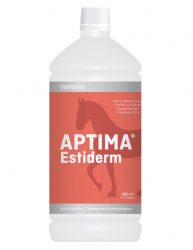
If you are interested in helping to improve the condition of your horse’s skin, get to know, conoce APTIMA® Estiderm
The skin as a mirror of health: A guide to preventing equine skin allergies
As riders, we spend hours grooming, observing and caring for our horses. This physical connection allows us to notice the smallest change: a new lump, a patch of hair loss or that persistent scratching against the paddock post that immediately puts us on alert. Skin allergies in horses are not just a cosmetic issue; they can be a sign that the immune system is fighting an internal battle.
Preventing dermatitis and other reactions is not a matter of luck, but of a strategy based on science and attentive management. Below, we explore how to protect the skin health of your equine companion.
1. The horse’s skin barrier
The skin is the horse’s largest organ and its first line of defence. Scientifically, the epidermis functions like a “brick wall”, where the cells are the bricks and the lipids (fats) are the mortar. When this barrier becomes weakened, allergens can penetrate and trigger an inflammatory response.
Why do allergies occur? Genetics plays a crucial role. Some horses are born with a predisposition to react to environmental substances such as pollens, moulds or mites. However, day-to-day management is often what tips the balance towards health or an allergic flare-up.
2. The number-one enemy: Culicoides hypersensitivity
If there is one term every horse owner should know, it is Equine Insect Bite Hypersensitivity (EIBH), also known as sweet itch. It is an allergic reaction to the saliva of mosquitoes of the Culicoides genus.
Entomological studies show that these insects have very specific habits. Making use of this knowledge is one of our best tools:
- Water management: Culicoides breed in stagnant water and damp organic matter. Keeping the areas around the stables dry and cleaning water troughs weekly can reduce the insect population at its source
- The effect of fans: These mosquitoes are poor fliers in moving air. Installing fans in stalls can help reduce their presence and make it harder for them to land on the horse.
- Protective insect sheets: Not all sheets are suitable. Fine-mesh fabrics (less than 1 mm) are recommended to physically prevent insects from getting through. Putting the sheet on before the hot season begins is vital to prevent the immune system from being triggered.
3. Nutrition for healthy horse skin
Sometimes we look for the definitive solution in creams and sprays, when the horse’s true protective barrier is built from within. The skin reflects what is happening in the body, and nutrition is its first line of defence.
Omega-3 fatty acids are key: horses whose diets are rich in them tend to react less to skin allergens. The problem is that dried hay loses much of the Omega-3 found in fresh pasture. Therefore, adding cold-pressed flaxseed oil or purified fish oils can help keep skin cell membranes stable and less reactive.
Minerals also matter. Copper and zinc are essential for producing keratin, the protein that gives structure to the skin and hair. When they are deficient, the skin can become fragile and the coat can lose density, leaving the door open to pathogens and allergens. In some cases, evaluating the diet and, when necessary, carrying out additional tests such as a blood test can help identify imbalances.
4. The risks of shampoos and conditioners for horses
The pH of horse skin is close to neutral (depending on the study, it may range from 6.4 to 7.5 depending on the anatomical area). Many human cleansing products have a pH of 5.5 (acidic). Repeated use on horses can:
- Remove the natural oils (sebum) that waterproof the skin.
- Alter the skin microbiota (the “good” bacteria that protect the horse).
Practical advice: Limit soapy baths to what is strictly necessary. For everyday use, plain water is sufficient to remove sweat. If you use shampoo, make sure it is specifically designed for horses and, above all, spend twice as much time rinsing as you do lathering. Soap residue under the girth can be an “invisible” cause of serious irritation.
5. The stable environment: dust, bedding and small details that matter
Sometimes we focus obsessively on what we put on the skin, but the horse spends most of the day breathing and coming into contact with its bedding. If there is dust, moisture or mould, its skin may reflect it.
Poor-quality hay or damp straw may contain fungal spores such as Aspergillus, which can cause anything from respiratory problems to hives. If your horse develops small lumps or bumps overnight, try changing the bedding to dust-free shavings, hemp or sterilised pellets. Ventilation is also essential: a stable with fresh air promotes health; it is not neglect.
6. Equipment hygiene: what touches the skin matters too
Equipment accumulates sweat, dust and bacteria. Unwashed saddle pads become abrasive and can irritate the back, especially when scented fabric softeners are used. Neutral, fragrance-free detergents are preferable.
Leather-cleaning products can also cause irritation. If you notice rubbing around the noseband or behind the ears, check what you are using to clean the tack.
Conclusion and final reflection
There is no magic lotion that can fix poor environmental management or inadequate nutrition. As riders, our responsibility is to be meticulous observers. Science gives us the tools, but our intuition and our day-to-day knowledge of our horse allow us to apply these recommendations before a problem appears.
A horse with healthy skin is a comfortable horse, and a comfortable horse is undoubtedly a happier and more willing partner at work.
Quick review checklist:
- [ ] Have I reduced exposure to insects during critical hours?
- [ ] Does my Omega-3 supplement come from a quality source?
- [ ] Have I removed human cleaning products from my grooming kit?
- [ ] Is my horse’s bedding clean and dust-free?
- [ ] Do I thoroughly rinse the equipment and skin after every session?
Maintaining this level of care will save us veterinary visits and, most importantly, spare our horse the unpleasant cycle of itching and inflammation.
If you are interested in helping to improve the condition of your horse’s skin, get to know, conoce APTIMA® Estiderm